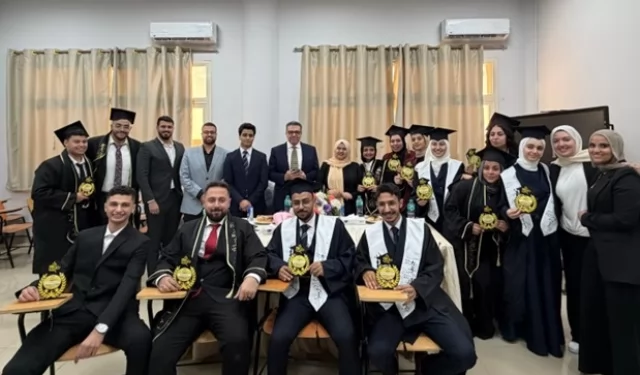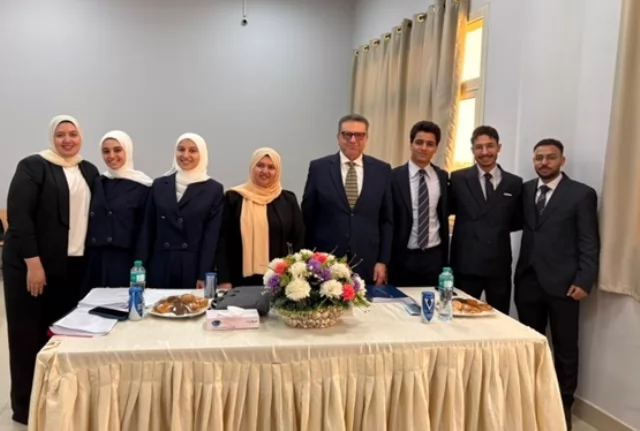
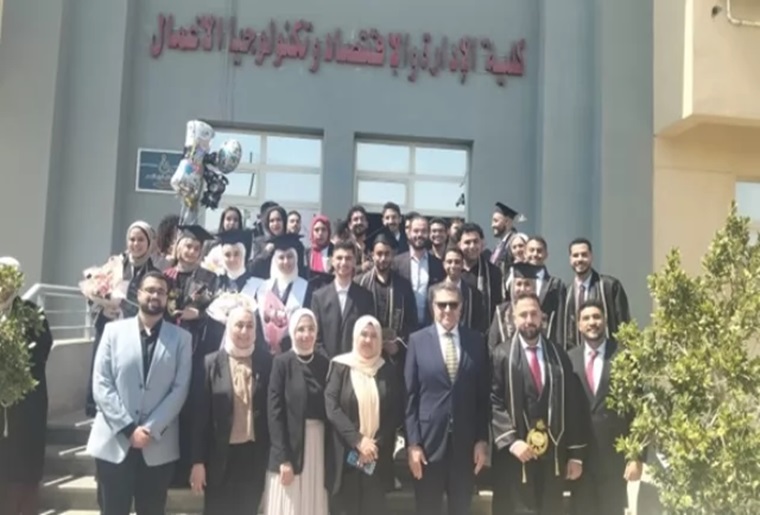
Students of Business Analytics at the Faculty of Management, Economics, and Business Technology at the Egyptian-Russian University present advanced graduation projects... Photos
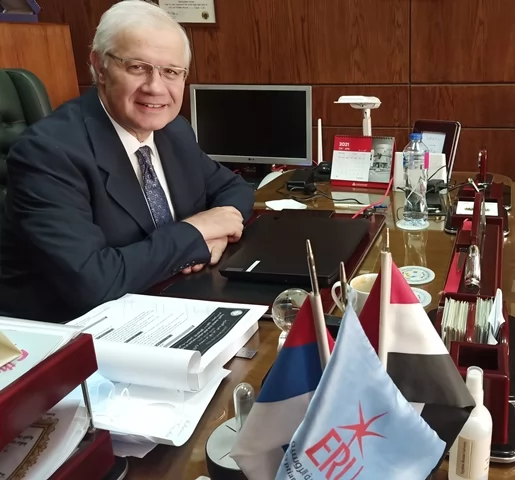
Dr. Sherif Fakhry Mohamed Abdel-Nabi, President of the Egyptian-Russian University, announced that the Business Technology Department at the Faculty of Management, Economics, and Business Technology discussed the graduation projects of the second cohort of the Business Analytics program for the academic year (2025-2026). The projects demonstrated the Egyptian-Russian University’s commitment to strengthening the integration between academic studies and labor market needs, preparing qualified cadres to compete and create a real positive impact on the future of the nation. This was implemented with the support of Dr. Mohamed Kamal El-Sayed Mostafa, Chairman of the Board of Trustees of the Egyptian-Russian University.
The President of the Egyptian-Russian University explained that the discussion of these student projects took place in the presence of a distinguished scientific and academic committee, with the participation of leaders and experts from the information technology and industry sectors. This reflects the faculty’s focus on linking its educational outcomes to practical applications and labor market requirements. He noted that the graduation project discussions are held at the university. As part of the university’s strategy to link student projects with the United Nations Sustainable Development Goals and the objectives of “Egypt Vision 2030,” and to promote the use of modern technology to serve society, the economy, and the environment.
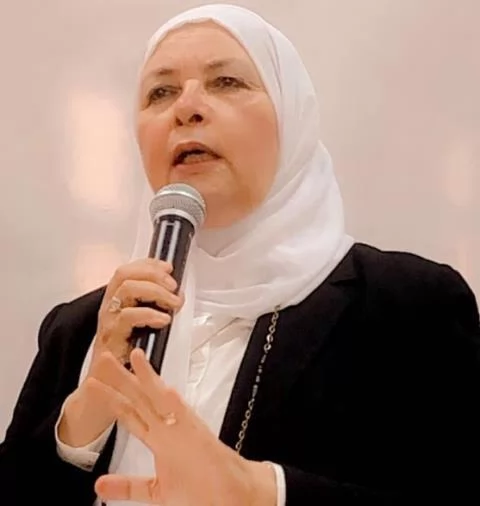
On the same topic, Dr. Tahera El-Sayed Hamia, Dean of the Faculty of Management, Economics, and Business Technology at the Egyptian-Russian University, stated that the projects reflect the advanced knowledge and skills acquired by the program’s students in the fields of business analysis, data science, and artificial intelligence. They presented innovative solutions to address real-world challenges in the areas of digital security, smart education, and sustainable energy, employing the latest artificial intelligence technologies, machine learning, and large-scale linguistic models. She revealed that the projects demonstrated the students’ ability to translate academic knowledge into practical, implementable applications, supporting the state’s drive towards digital transformation and a knowledge-based economy, and aligning with “Egypt Vision 2030.”
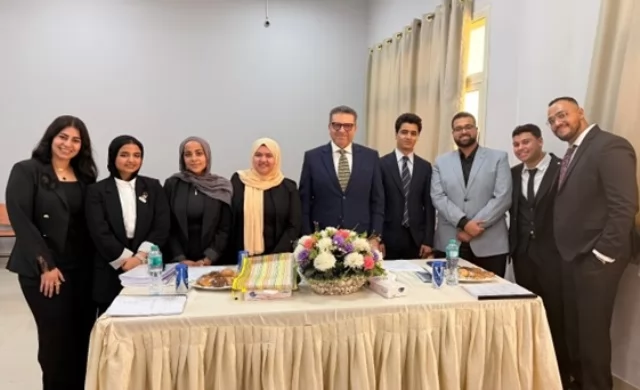
The Dean of the Faculty of Management, Economics, and Business Technology at the Egyptian-Russian University added that the discussion and judging committee consisted of:
– Dr. Angie Raouf, Vice Dean of the Faculty of Management, Economics, and Business Technology at the Egyptian-Russian University, as a judge and member.
– Eng. Mustafa Abu Gamra, Managing Director of MediaSy, as an external judge, emphasizing the Faculty’s commitment to involving industry leaders and experts in evaluating student projects to ensure their alignment with labor market demands and the latest trends in artificial intelligence and business analytics.
– Dr. Ruwaida Ali, Lecturer of Statistics in the Business Technology Department, as a supervisor and member.
– Dr. Shady Abdel Moneim, Lecturer in the Business Technology Department, as a supervisor and member.
Dr. Tahera El-Sayed Hamieh noted that the students presented three outstanding projects during the discussion, as follows:
First: Electronic Guard: Cyberbullying Detection AI Solutions for Social Media
Prepared by students: Omar Khorshid, Omar Gamal, Mariam Tamer Abdel Latif, and El-Hosny Ezzat El-Shenawy, supervised by Dr. Ruwaida Ali and Eng. Mariam Abdel Hamid. The team presented a project aimed at developing an intelligent system for detecting multilingual cyberbullying on social media platforms using artificial intelligence and natural language processing techniques. The system supports Modern Standard Arabic, colloquial Arabic, Franco-Arabic, and English, in addition to integrating Optical Character Recognition (OCR) technology to analyze text within images.
The Dean of the Faculty of Management, Economics, and Business Technology at the Egyptian-Russian University stated that the project relied on building massive databases and evaluating the latest deep learning and linguistic models, achieving outstanding results in detection accuracy. This enhances its potential for use in supporting digital safety and protecting users of online platforms. The project contributes to supporting the goals of “Egypt Vision 2030” towards building a safe digital society and supports several Sustainable Development Goals, including: “Good Health, Quality Education, Reduced Inequalities, Peace, Justice, and Strong Institutions.”
Dr. Tahera El-Sayed Hamia revealed that the second project is the Smart Academic Advising Platform: “Enhancing Academic Advising, Integrating Learning Analytics, and Study Assistant in Higher Education Using AI Techniques.” It was developed by students: Ezz El-Din Shady Youssef, Mohamed Ahmed Wagih, Irene Dawod Zakaria, Menna Amr Salem, and Mariam Tamer Mohamed, under the supervision of Dr. Shady Abdel Moneim and Teaching Assistant Abdel Rahman Mahmoud. The team presented a smart learning platform that utilizes artificial intelligence, educational analytics, and big language models to enhance the academic advising system and provide a smart study assistant that delivers a personalized learning experience tailored to each student’s needs and academic level.
The Dean of the Faculty of Management, Economics, and Business Technology at the Egyptian-Russian University noted that the project’s platform relies on semantic retrieval and intelligent agent technologies to improve the quality of educational services and support academic decision-making. This contributes to developing the university learning environment and promoting digital transformation. The project aligns with the goals of “Egypt Vision 2030” in developing the education system and building a knowledge economy, and it also contributes to achieving the Sustainable Development Goals related to “quality education, innovation, and reducing inequalities.
Dr. Tahera El-Sayed Hamieh revealed that the second project is the Smart Academic Advising Platform: “Enhancing Academic Advising, Integrating Learning Analytics, and Study Assistant in Higher Education Using AI Techniques.” The project was developed by students Ezz El-Din Shady Youssef, Mohamed Ahmed Wagih, Irene Daoud Zakaria, Menna Amr Salem, and Mariam Tamer Mohamed, under the supervision of Dr. Shady Abdel Moneim and Teaching Assistant Abdel Rahman Mahmoud. The team presented a smart educational platform that utilizes artificial intelligence, learning analytics, and big language models to enhance the academic advising system and provide a smart study assistant that delivers a personalized learning experience tailored to each student’s needs and academic level.
The Dean of the Faculty of Management, Economics, and Business Technology at the Egyptian-Russian University noted that the project platform relies on semantic retrieval techniques and intelligent agents to improve the quality of educational services and support academic decision-making. This contributes to developing the university learning environment and promoting digital transformation. The project aligns with the goals of “Egypt Vision 2030” in developing the system. Education and building a knowledge economy contribute to achieving the Sustainable Development Goals related to quality education, innovation, reducing inequalities.
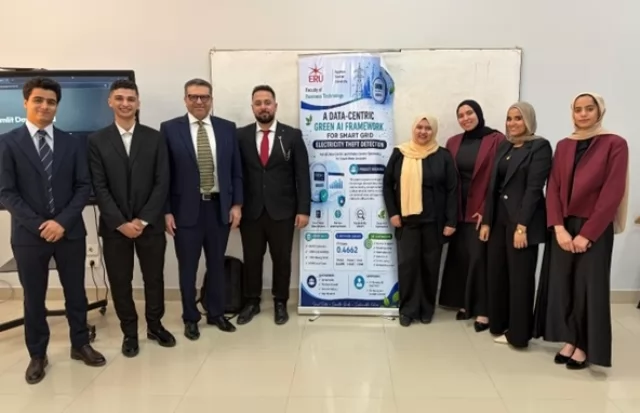
Dr. Tahera El-Sayed Hamieh reported that the third project is: “A Data-Centric Green AI Framework for Smart Grid Electricity Theft Detection,” prepared by students Alaa Mohamed, Nermin Mabrouk, Ibrahim Youssef, and Ahmed Mohamed, supervised by Dr. Ruwaida Ali and Eng. Nouran Amr. The project focused on developing an intelligent framework for detecting electricity theft in smart grids using machine learning, data analysis, and interpretable artificial intelligence techniques, while adopting the Green AI concept, which emphasizes improving model efficiency and reducing computing resource consumption.
The Dean of the Faculty of Management, Economics, and Business Technology at the Egyptian Russian University added that the student team developed an interactive dashboard that supports predicting electricity theft and interpreting model results. This contributes to improving the efficiency of power grids and reducing non-technical losses. The project reflects the role of artificial intelligence applications in supporting the sustainability of the energy sector and enhancing infrastructure efficiency in line with Egypt’s Vision 2030, this program contributes to achieving the Sustainable Development Goals, particularly clean energy, industry, innovation, and responsible consumption and production.
At the conclusion of the discussions, the judging panel commended the students’ outstanding academic level and the quality of the projects, both academically and practically. They affirmed that the Business Analytics program continues to solidify its position as a leading program in preparing graduates with data analysis and artificial intelligence skills, capable of utilizing modern technology to develop solutions that serve society and meet the needs of various sectors.
The judging panel emphasized that the diversity of project topics and their relevance to digital transformation and sustainable development reflect the program’s success in producing graduates who can compete in the labor market and contribute to achieving comprehensive development goals. This further strengthens the Egyptian-Russian University’s position as an academic institution that supports innovation and excellence.
In the same context, the discussion committee praised the outstanding scientific level of the projects, and their excellence in employing the latest artificial intelligence, data analysis and machine learning technologies in providing practical solutions to real problems. It emphasized that these projects reflect the quality of the program and its ability to prepare graduates who possess the analytical and technical skills necessary to compete in the labor market and contribute to supporting innovation and digital transformation