Egyptian Russian University Launches Hackathon for Innovation and Sustainability in Waste Management – photos
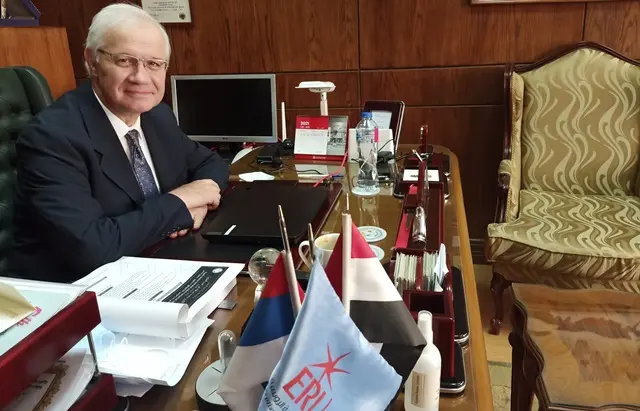
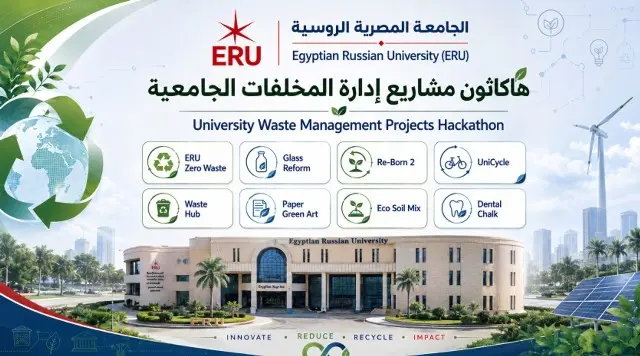
Dr. Sherif Fakhry Mohamed Abd-el-Naby, President of the Egyptian Russian University (ERU), announced that the university management launched “ERU Greenovate 2026 – University Waste Management Innovation Hackathon.” This initiative is part of the university’s participation in the University Waste Management Competition and is carried out in cooperation and coordination with the Innovators Support Fund (ISF). The initiative aims at supporting students’ creativity, embedding concepts of sustainability and the circular economy among them, and transforming innovative ideas into practical solutions with environmental, economic, and social impact. The initiative was implemented with the support of Dr. Mohamed Kamal Mustafa, Chairman of the University’s Board of Trustees.
The ERU President stated that eight innovative student projects are participating in the hackathon, having completed the competition’s application procedures. The projects included different ideas, ranging from recycling and the utilization of glass, paper, plastic, and gypsum waste to the development of sustainable solutions. They aim at improving the university environment and maximizing resource utilization.
Dr. Abd-el-Naby emphasized the university’s strong commitment to enhancing a culture of innovation and sustainability among its students. This commitment is based on the belief that the university’s role is not confined to merely providing academic knowledge; but also includes empowering students to apply the knowledge and skills they have acquired to address real-world societal challenges. He pointed out that “ERU Greenovate 2026” represents more than just a student competition; it serves as a genuine space and a key platform for fostering innovation and applied research, as well as for investing in the minds of young people to develop smart technological solutions. Moreover, the projects’ focus on the “Zero Waste” campus concept contributes to transforming the university environment into a sustainable, miniature ecological community, a step that paves the way for carrying out such models in surrounding cities and represents a direct investment in a more sustainable future.
The ERU President added that the diversity of the participating projects reflects the students’ capability of creative thinking and their ability to leverage their various specializations to find solutions with practical value. He highlighted the university’s commitment to providing the academic environment and institutional support necessary to nurture promising ideas. He also expressed his gratitude and appreciation to the Innovators Support Fund for launching the competition and for its efforts to reinforce the atmosphere of creativity across Egyptian universities and support innovative and talented students. He also emphasized the importance of continued collaboration between the university and the Fund in supporting outstanding student initiatives.
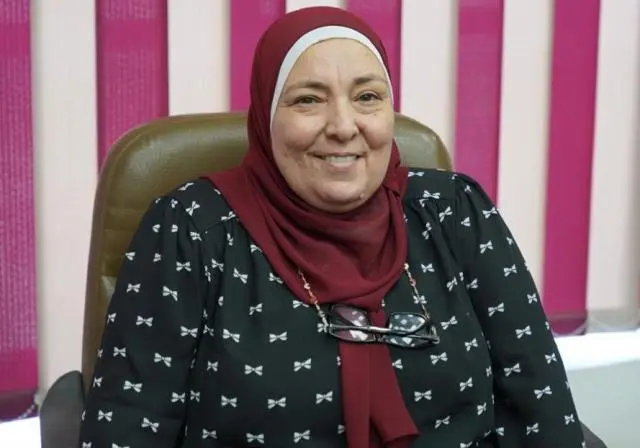
In the same context, Dr. Hanaa Abd-el-Rahman, Advisor to the ERU President for Student Activities, asserted that the university considers student activities as a fundamental pathway for building up students’ personalities and developing their professional and creative skills. Far from being merely parallel to the educational process, these activities embody an integrated strategic vision that enhances universal sustainable development goals, raises student awareness, and translates theoretical knowledge into practical community actions.
The Advisor to the ERU President for Student Activities stated that “ERU Greenovate 2026” offers an integrated model of what student activities aim to accomplish. Students begin with an idea, work within a team, receive guidance and support, develop their projects, and present them to specialists, a process that supports skills in teamwork, leadership, innovation, problem-solving, as well as the sense of responsibility.
Dr. Hanaa Abd-el-Rahman highlighted the importance of the participating projects triggering a tangible impact within the university environment and the surrounding community, while keeping the potential for outstanding projects to be further developed into sustainable initiatives or applications in the future.
On his part, Dr. Said Hassan Ibrahim, the ERU’s Coordinator for the Innovators Support Fund and the Competition’s Coordinator, stated that the Hackathon was designed as a comprehensive project development journey, rather than merely a stage for presenting ideas to judging panels. He added that the basic goal is to transform each project from a mere innovative idea into a complete, viable solution that is scalable and capable of further development. That is why the current phase focuses on closely monitoring projects, reviewing technical and practical aspects, and providing guidance and support to student teams prior to the final judging stage.
The ERU’s Coordinator for the Innovators Support Fund, who also serves as the Competition Coordinator, stated that the Hackathon helps train students to systematically identify problems, devise appropriate solutions, test their feasibility, and evaluate their environmental, economic, and societal impacts. He affirmed that the advancement of eight projects to this stage reflects the students’ awareness of sustainability issues and their ability to bridge scientific innovation with social responsibility.
Dr. Said Hassan Ibrahim revealed that the list of projects participating in ERU Greenovate 2026 includes:
1- Towards a zero-waste university economy.
2- Reviewing the value of glass waste.
3- Giving waste a new life and purpose.
4- Innovative solutions for reusing and recycling.
5- An integrated system for a zero-waste campus.
6- Sustainability and revitalization: bridging paper waste and green aesthetics.
7- Sustainable soil improvement using lime and shredded plastic waste.
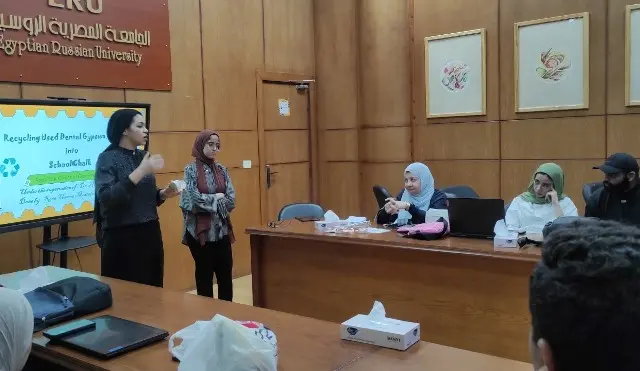
8- Recycling used dental gypsum models at the Faculty of Oral and Dental Medicine into school chalk.
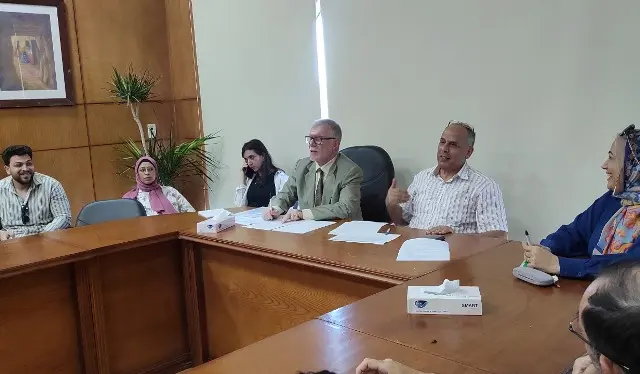
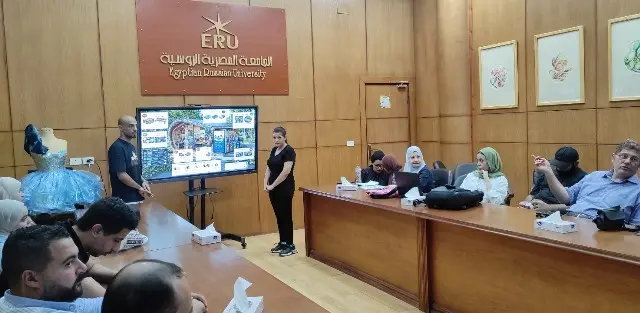
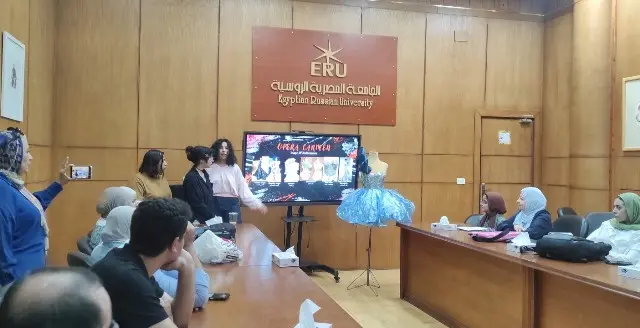
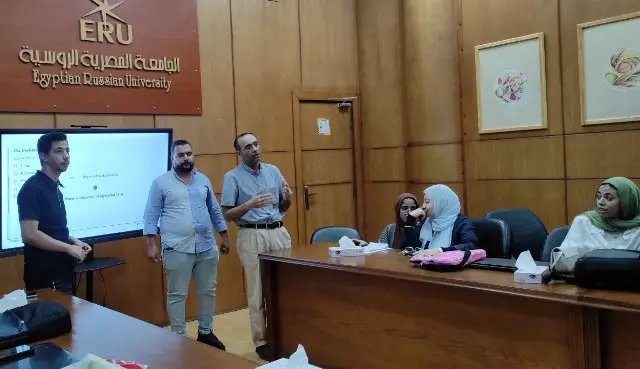
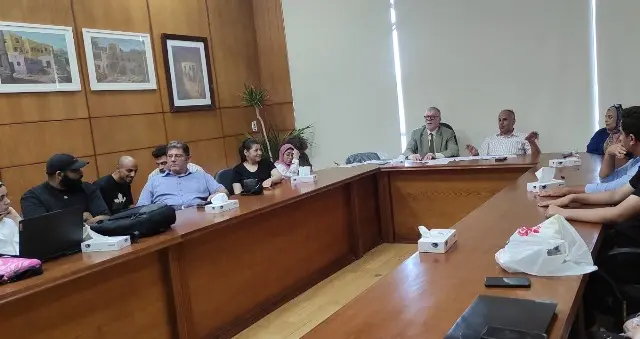
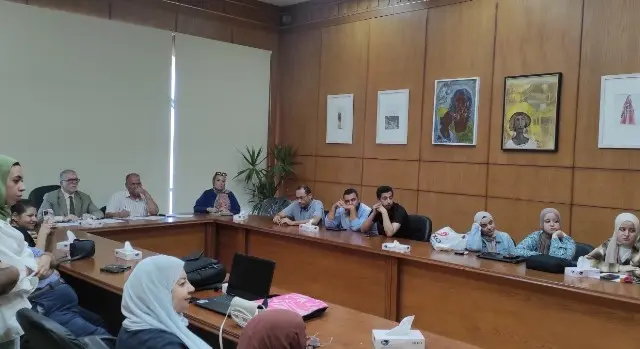
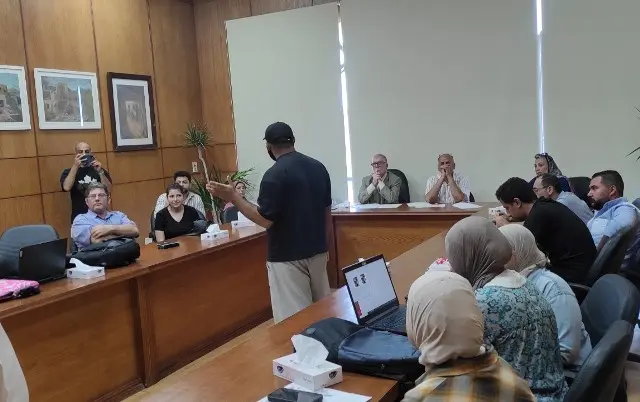
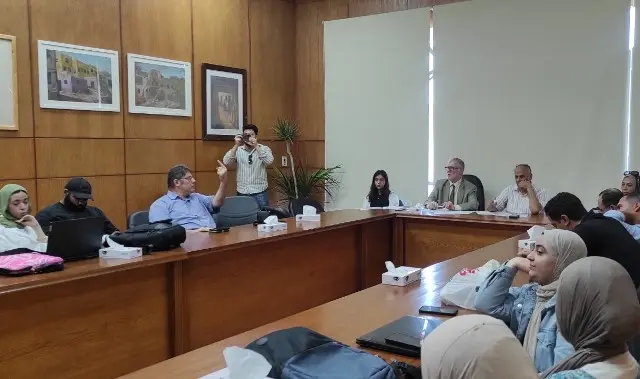
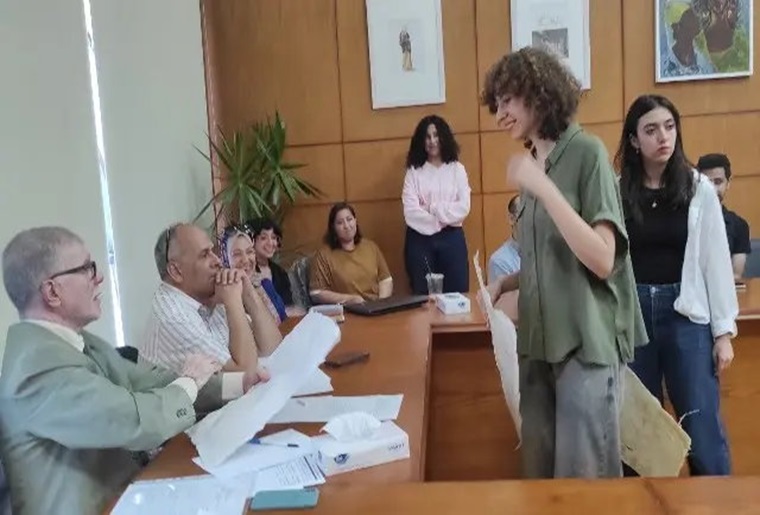
The ERU’s Coordinator for the Innovators Support Fund, who also serves as the Competition Coordinator, stated that the Hackathon activities include individual follow-up sessions for each team. These sessions aim to evaluate progress, review abidance by competition requirements, and identify areas requiring completion or further development prior to the final judging stage. The meetings are conducted by a committee chaired by Dr. Alaa Al-Batsh, Dean of the Faculty of Engineering, and comprise faculty vice-deans, and are attended by Dr. Hanaa Abd-el-Rahman, Advisor to the University President for Student Activities. This provides student teams with the opportunity to receive comprehensive feedback as well as academic and technical support before the final phase.
It is worth mentioning that the “ERU Greenovate 2026” events culminate in the final judging phase for participating projects, which is due to be held on Monday, September 7, 2026. During this stage, student teams will present their projects, models, and outputs to the judging panel for evaluation and for selecting the outstanding projects based on the competition’s approved criteria.
It is also worth noting that this final judging round marks the conclusion of an integrated process involving supervision, monitoring, and development. It enhances the ERU’s commitment to transforming the university campus into an environment that supports innovation and sustainability, where students serve as active participants in creating solutions to environmental and societal challenges.