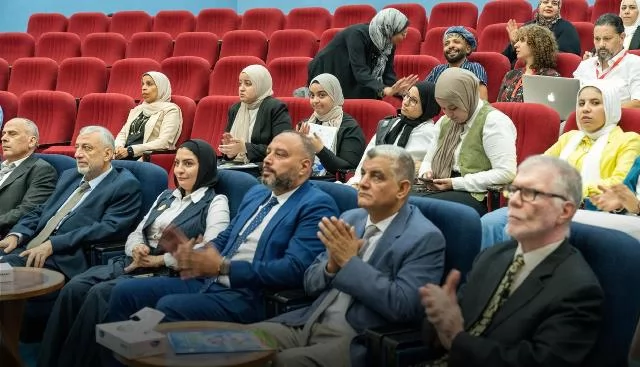
Featuring 7 projects from 4 faculties and the participation of 24 students... The Egyptian Russian University Announces Winners of the Waste Management Competition (Photos)
Dr. Sherif Fakhry Mohamed Abdel-Nabi, President of the Egyptian Russian University, announced the conclusion of the “University Waste Management Competition.” This event aligns with the university’s strategy to support student innovation and creativity, foster a culture of sustainability and the circular economy, bridge academic knowledge with practical application, and encourage students to devise practical, sustainable solutions for environmental challenges—thereby transforming waste into value-added resources.
The University President explained that the competition was conducted under the supervision of the Ministry of Higher Education and Scientific Research, with oversight and support from the Fund for Supporting Innovators and Geniuses (ISF) and the Leadership Development Institute. This reflects the Ministry’s commitment to supporting the potential of university youth, stimulating innovation, and promoting a culture of sustainability and green entrepreneurship among Egyptian university students.
Dr. Sherif Fakhry Mohamed Abdel-Nabi noted that the competition received the support of Dr. Mohamed Kamal Mostafa, Chairman of the Board of Trustees of the Egyptian Russian University. He emphasized the university administration’s dedication to providing an environment that fosters creativity and innovation, as well as its commitment to adopting viable student initiatives that can be further developed, thereby strengthening the university’s role in serving the community and achieving sustainable development goals.
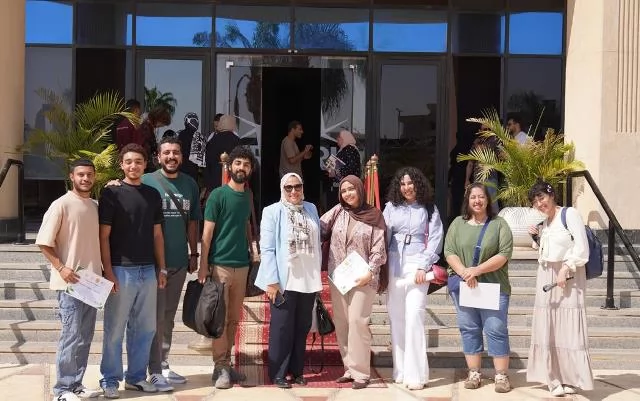
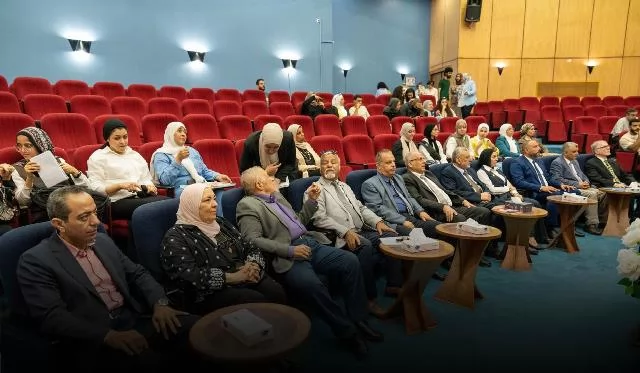
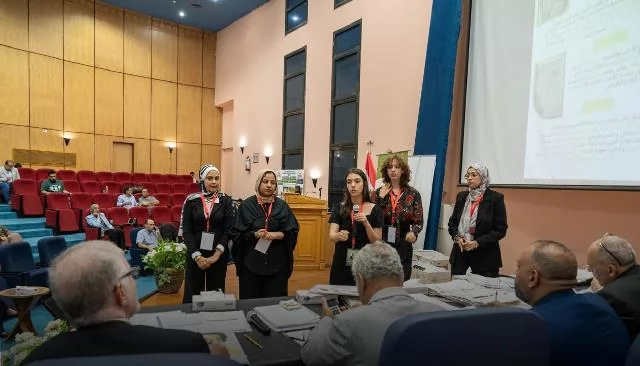
The President of the Egyptian Russian University (ERU) explained that the competition featured seven student projects representing four of the university’s faculties: Engineering, Fine Arts, Applied Arts, and Oral and Dental Medicine. The event involved 24 students, seven academic supervisors, seven jury members, and a five-member administrative and organizational team. The projects were distributed as follows: three from the Faculty of Engineering, two from the Faculty of Fine Arts, and one from each the Faculties of Applied Arts and Oral and Dental Medicine.
Dr. Sherif Fakhry Mohamed Abdel-Naby noted the diversity of the projects, which covered topics such as the circular economy and the “Zero Waste” concept, glass and paper recycling, the use of plastic waste in engineering applications, the incorporation of waste materials into sustainable art, and the recycling of gypsum models used in dental studies. These projects reflect the integration of various disciplines in addressing waste management issues. He emphasized the university’s commitment to transforming student innovations into practical solutions, noting that these projects exemplify the university’s goal of moving students beyond the mere reception of knowledge toward applying it to critical thinking, innovation, and solution-building.
In the same context, Dr. Hanaa Abdel-Rahman, advisor to the ERU President for student activities, affirmed that the competition reflects the university’s vision of evolving the concept of student activities. The aim is to transform them into a genuine tool for character building and for developing students’ skills in research, innovation, teamwork, and problem-solving.
The Advisor to the President of the Egyptian Russian University for Student Activities explained that the participation of students from four different faculties underscores that sustainability is a shared issue to which every discipline can contribute through its unique perspective and expertise. She noted that this diversity fostered a range of ideas, all converging on the goals of resource conservation and the optimal utilization of waste.
Dr. Hanaa Abdel Rahman added that the true value of the experience lies not merely in the rankings achieved by the students, but in the skills acquired by all participants—including research, analysis, time management, teamwork, presentation, responsiveness to feedback, and continuous improvement. She reaffirmed the university’s ongoing commitment to supporting activities that identify talented and innovative students, providing them with genuine opportunities for experiential learning.
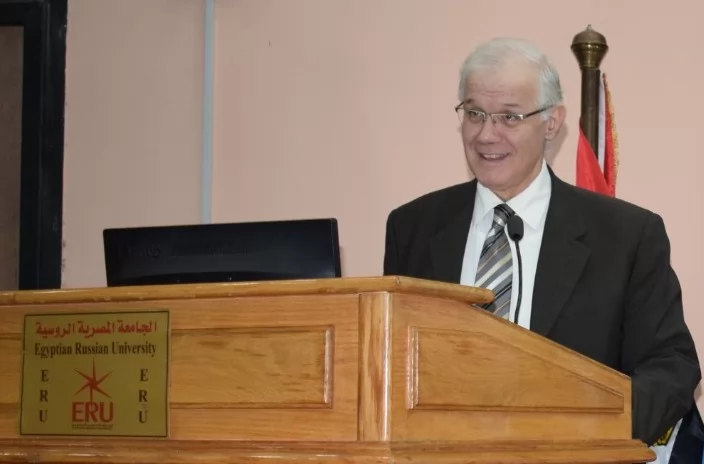
For his part, Dr. Alaa Mohamed El-Batsh, Dean of the Faculty of Engineering at the Egyptian Russian University and Head of the Judging Committee, emphasized that the participating projects demonstrated a clear diversity in approaches to thinking about and addressing waste management. He explained that the multidisciplinary composition of the committee allowed for project evaluation from various scientific, practical, and innovative perspectives. He further noted that the Egyptian Russian University believes its role extends beyond imparting academic knowledge to preparing students who are capable of critical thinking, creativity, and addressing societal challenges, ultimately transforming their learning into solutions of tangible value.
The Dean of the Faculty of Engineering at the Egyptian Russian University and Head of the Jury noted that students successfully progressed from problem identification to devising practical solutions. Their ideas ranged from reuse, recycling, and engineering or artistic applications to supporting concepts of the circular economy and “Zero Waste.” He highlighted that the experience of presenting and discussing projects before a specialized committee holds significant educational value; it enhances students’ critical thinking, problem-solving skills, and ability to scientifically defend their ideas, while also allowing them to utilize feedback for future project development.
Dr. Alaa Mohamed El-Batsh stated that the diversity of projects—among engineering, arts, design, and dentistry—reflects the importance of interdisciplinary work, emphasizing that contemporary challenges require the integration of diverse expertise and knowledge. He added that a distinctive feature of this experience was the students’ approach to wastes as a resource that could be reimagined and imbued with new value. He stressed that the announcement of results does not mark the end of the projects, but rather the beginning of a process to study and develop viable ideas, and to support those with the potential to evolve into future research initiatives, entrepreneurial ventures, or promising models.
In the same context, Dr. Mostafa Amin Ibrahim—Program Director at the Innovators and Talents Support Fund, Director of the University Waste Management Program, and a jury member—stated that the competition addresses a crucial aspect of raising student awareness regarding the circular economy and sustainable resource management. He explained that modern waste management has moved beyond the mere collection and disposal of waste; it is now based on a system that begins with waste reduction, followed by reuse, recycling, and value recovery, ultimately leading to Establishing more efficient and sustainable production and consumption patterns.
Dr. Mostafa Amin Ibrahim revealed that the participating projects demonstrated a clear awareness of the potential to transform various types of waste into new resources. He emphasized that the goal was not merely to determine the top-ranking entries, but to discover promising ideas and assist their creators in advancing them to more mature stages—scientifically, technically, and economically.
In a related context, Dr. Saeed Hassan Ibrahim—the competition director, Vice Dean of the Faculty of Artificial Intelligence at the Egyptian Russian University, and the university’s coordinator with the Fund for Supporting Innovators and Geniuses—announced that the success of the university waste management competition is measured not only by the number of projects or the names of the winners, but by its ability to create a comprehensive experience combining learning, innovation, training, teamwork, evaluation, and development. He noted that the objective from the outset was for the event to be more than just a contest ending with the announcement of rankings; rather, it was designed as a holistic learning journey that begins with identifying a problem, conceptualizing an idea, researching and developing appropriate solutions, and proceeds to teamwork, project presentation, and discussion with a panel of diverse experts.
The Vice Dean of the Faculty of Artificial Intelligence at the Egyptian Russian University and the university’s coordinator with the Fund for Supporting Innovators and Geniuses highlighted that the diversity of projects across four faculties underscores that innovation and sustainability are not the responsibility of a single discipline, but rather a culture to which every field can contribute. He added that the competition sought to instill the concept that waste does not necessarily mark the end of a material’s lifecycle; instead, it can represent the beginning of a new cycle that generates economic, environmental, or societal value.
Dr. Said Hassan Ibrahim noted that the most critical phase begins after the results are announced. This involves evaluating projects that could be further developed or tested within the university, identifying ideas requiring additional scientific or technical support, and pinpointing projects with the potential to evolve into entrepreneurial ventures or startups. He congratulated the top three winners and all participating teams, emphasizing that every student who took part—gaining skills in research, teamwork, and idea presentation—has achieved something of real value. He stressed the importance of continuing the learning and development process, ensuring that projects do not come to a halt simply because the competition has ended.
The Vice Dean of the Faculty of Artificial Intelligence at the Egyptian Russian University—who also serves as the university’s coordinator with the Fund for Supporting Innovators and Talented People (ISF)—expressed his gratitude to the university administration, the ISF, the Institute of Leadership Development, the jury, academic supervisors, the administrative and organizing team, and the participating students. He affirmed that the competition’s success was the fruit of comprehensive teamwork.
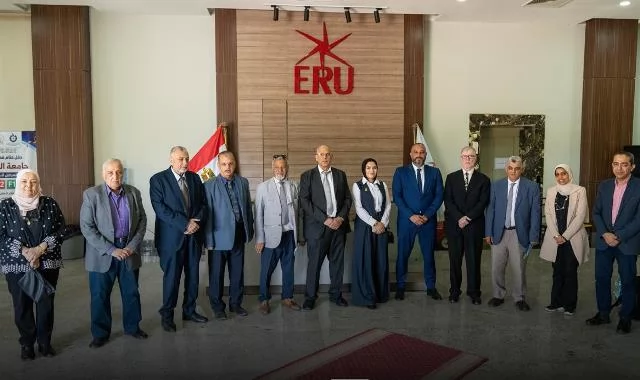
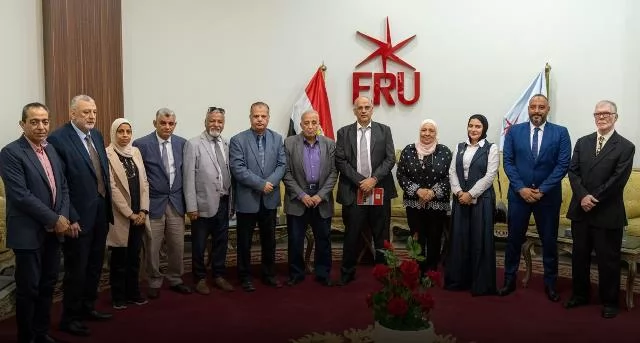
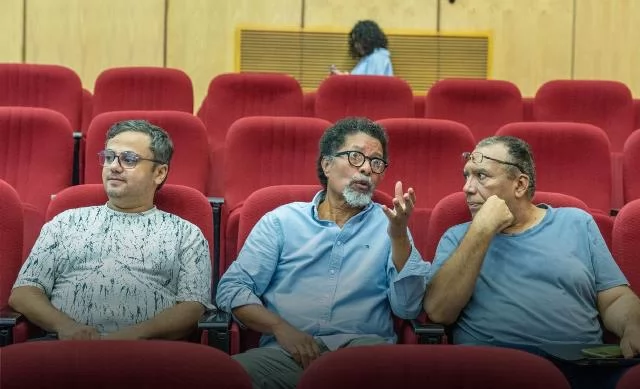
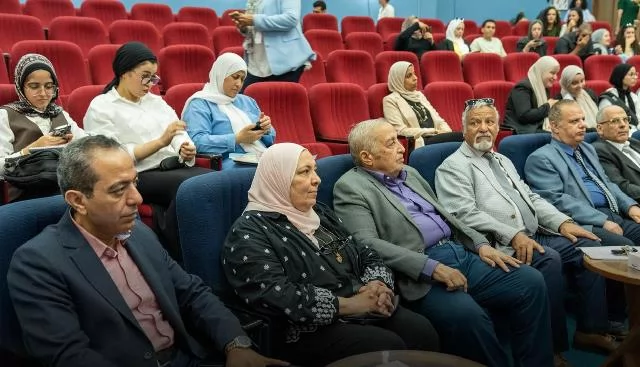
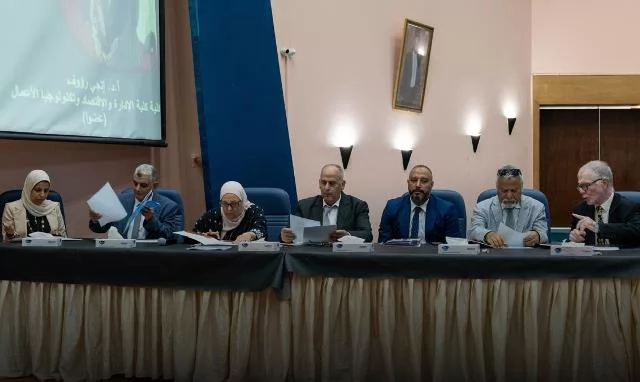
It is worth noting that the competition’s jury comprised seven members with diverse expertise and specializations, chaired by Dr. Alaa El-Batsh, Dean of the Faculty of Engineering. The members included: Dr. Hanaa Abdel Rahman, Advisor to the University President for Student Activities; Dr. Mostafa Amin Ibrahim, Program Manager at the ISF and Director of the University Waste Management Program; Dr. Said Hassan Ibrahim, Vice Dean of the Faculty of Artificial Intelligence and University Coordinator for the ISF; Dr. Gamil Mohamed Abdullah, Vice Dean of the Faculty of Pharmacy; Dr. Engy Raouf, Vice Dean of the Faculty of Management, Economics, and Business Technology; and Dr. Mohamed Omar Hendy, Head of the Occupational Health and Safety Committee and Director of the University’s Quality Assurance Department.
Academic supervision for the projects was provided by: Dr. Ahmed Ibrahim Samir Zaki, Dr. Amani Amer, Dr. Ibrahim Fawzy Ibrahim El-Demiry, Dr. Sherif Mohamed Hosny Shoukry, Dr. Heba Ali Abdel-Gawad Mohamed Ali Abu Zeid, Dr. Nermin Farouk Mohamed Ibrahim El-Gamal, and Eng. Ahmed Mohamed Khalil, alongside representatives from the Faculties of Engineering, Oral and Dental Medicine, Fine Arts, and Applied Arts.
The competition featured seven projects that demonstrated a clear diversity in the fields of innovation and sustainability, as follows:
1- ERU Zero Waste Economy – The “EcoMinds” team from the Faculty of Engineering, featuring students Jana Ahmed Mahmoud, Youssef Mohamed Ibrahim Hegazy, and Maria Medhat Samuel Seveen, under the supervision of Dr. Ahmed Ibrahim Samir Zaki.
2- Flat Glass Waste and Glass Containers – The “GlassReform” team from the Faculty of Applied Arts, comprising students Sohaila Yasser Ahmed, Salma Yasser Ahmed, Rana Amr Soliman, Radwa Ibrahim Shafiq Ibrahim Kashk, and Asmaa Kamal Mohamed Daoud, under the supervision of Dr. Heba Ali Abdel-Gawad Mohamed Ali Abu Zeid.
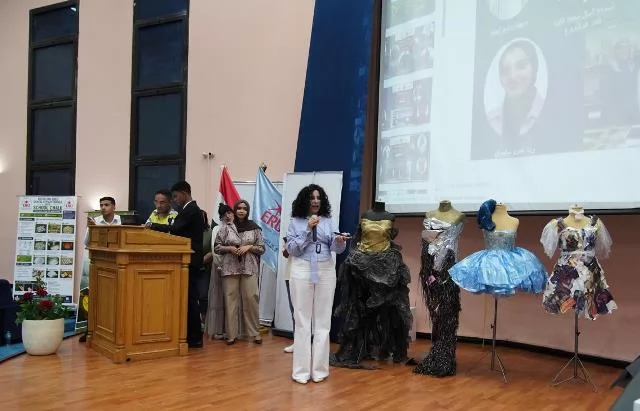
3- Art Brought to Life – The “RE-BORN” team from the Faculty of Fine Arts, featuring students Tabarak Hussein Abdel-Alim Mohamed Ibrahim, Malak Ali Saeed Youssef, Aya Hamdy Hosny Salem Mohamed, Nour Ayman Ali Mohamed El-Sayed Nassar, and Ziad Magdy Abdel-Rahim Abdullah, under the supervision of Dr. Nermin Farouk Mohamed Ibrahim El-Gamal.
4- Zero Waste Hub – The “ZeroHub” team from the Faculty of Engineering, featuring students Maria Medhat Samuel Sefeen and Karim Ehab Abdel-Rahman Ahmed, supervised by Dr. Ahmed Ibrahim Samir Zaki and Eng. Ahmed Mohamed Khalil.
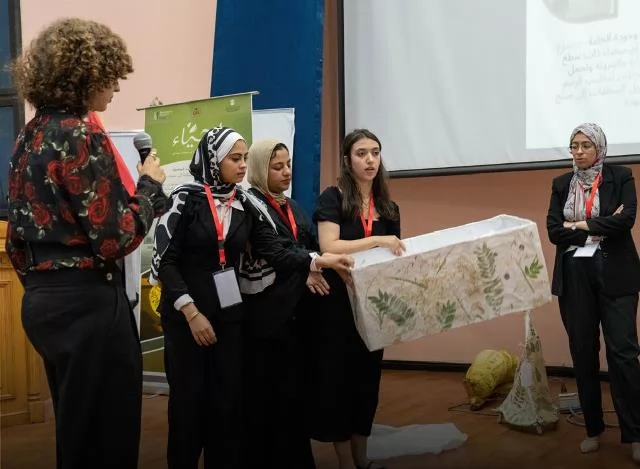
5- Sustainable Art through Paper Waste and Green Aesthetics – The “Revive” team from the Faculty of Fine Arts, comprising students: Ahd Mostafa Mostafa Mohamed, Mariam Mohamed Ahmed Abdel-Baset, Mai Abdel-Naby Abdel-Ghani Mohamed Ibrahim, Fatma Gamal Sadek Mohamed, and Mariam Ahmed Mohamed Tawfik; supervised by: Assoc. Prof. Dr. Sherif Mohamed Hosny Shoukry.
6- Sustainable Improvement of Soft Soil Using Lime and Shredded Plastic Waste – The “GeoGreen” team from the Faculty of Engineering, featuring: Mohamed Adel Abdel-Wakil and Basanti Adel Sedky; supervised by: Dr. Ibrahim Fawzy Ibrahim El-Demiry.
7- Recycling Used Dental Gypsum Models into School Chalk – The “GypsiChalk” team from the Faculty of Oral and Dental Medicine, featuring: Roaa Osama Mostafa and Nada Mostafa Mohamed; supervised by: Dr. Amani Amer.
The seven projects showcase diverse innovation pathways—ranging from recycling and reuse to the circular economy, sustainable art, engineering applications, and the utilization of medical waste—demonstrating the students’ ability to leverage their respective disciplines to address sustainability challenges.
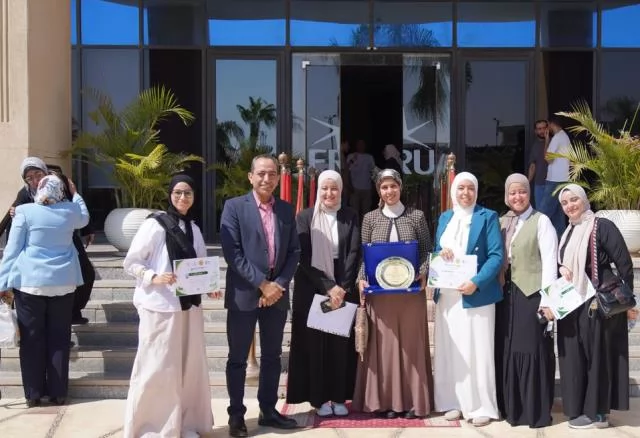
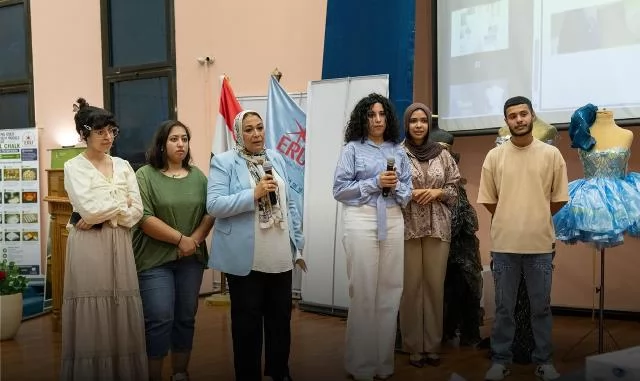
The competition concluded with three projects—representing three different faculties and involving a total of 13 students—securing the top three places.
First place went to the “Sustainable Art through Paper Waste and Green Aesthetics – Revive” project from the Faculty of Fine Arts. The team comprised Ahd Mostafa Mohamed, Mariam Mohamed Ahmed Abdel-Baset, Mai Abdel-Naby Abdel-Ghani Mohamed Ibrahim, Fatma Gamal Sadek Mohamed, and Mariam Ahmed Mohamed Tawfik, under the supervision of Assoc. Prof. Dr. Sherif Mohamed Hosny Shoukry.
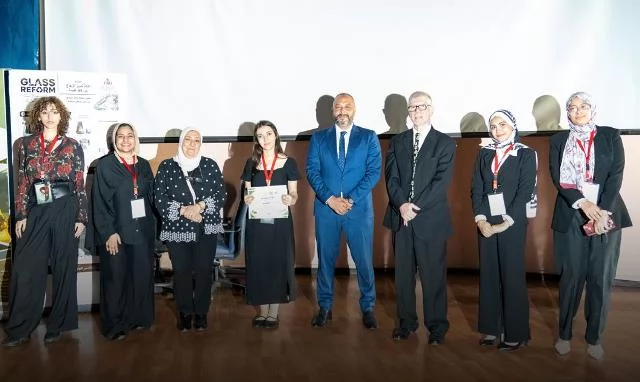
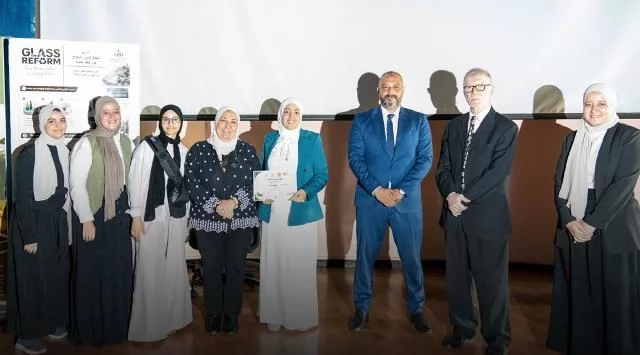
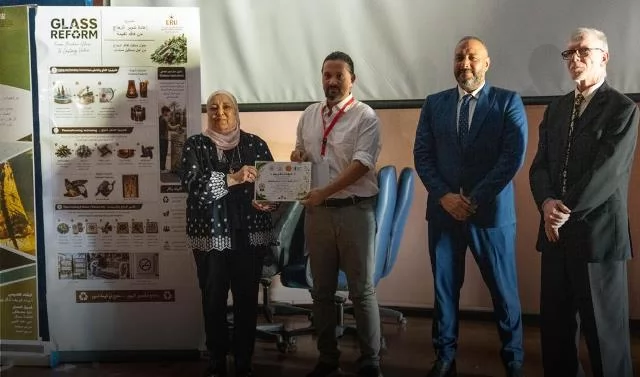
Second place was awarded to the “Flat Glass Waste and Glass Containers – GlassReform” project from the Faculty of Applied Arts. The team included Sohaila Yasser Ahmed, Salma Yasser Ahmed, Rana Amr Soliman, Radwa Ibrahim Shafiq Ibrahim Kashk, and Asmaa Kamal Mohamed Daoud, under the supervision of Dr. Heba Ali Abdel-Gawad Mohamed Ali Abu Zeid.
Third place went to the “ERU Zero Waste Economy – EcoMinds” project from the Faculty of Engineering. The team consisted of Jana Ahmed Mahmoud, Youssef Mohamed Ibrahim Hegazy, and Maria Medhat Samuel Sevin, under the supervision of Dr. Ahmed Ibrahim Samir Zaki.
Thus, the top three positions were claimed by the faculties of Fine Arts, Applied Arts, and Engineering—reflecting the broad scope of participation and the diversity of disciplines contributing innovative waste management solutions.
The competition’s administrative and organizational team included: Dr. Hanaa Abdel-Rahman, Advisor to the University President for Student Activities; Ms. Ikram Abdel-Hamid, University Secretary-General; Eng. Ahmed Amin, Assistant University Secretary-General; Ms. Dalia Farouk, Head of the Central Administration for Internal Audit and Governance; and Mr. Mohamed Abdullah, Director of the Student Welfare Department.
At the conclusion of the events, the Egyptian Russian University reaffirmed its commitment to integrating innovation, sustainability, and entrepreneurship into the students’ university experience. It encouraged them to transform the knowledge and skills they have acquired into solutions that address real-world challenges within the university and the broader community. The participating projects serve as a springboard for future efforts, paving the way to explore opportunities for developing outstanding ideas, fostering inter-faculty collaboration, and transforming promising student projects into viable, sustainable, and optimizing solutions.
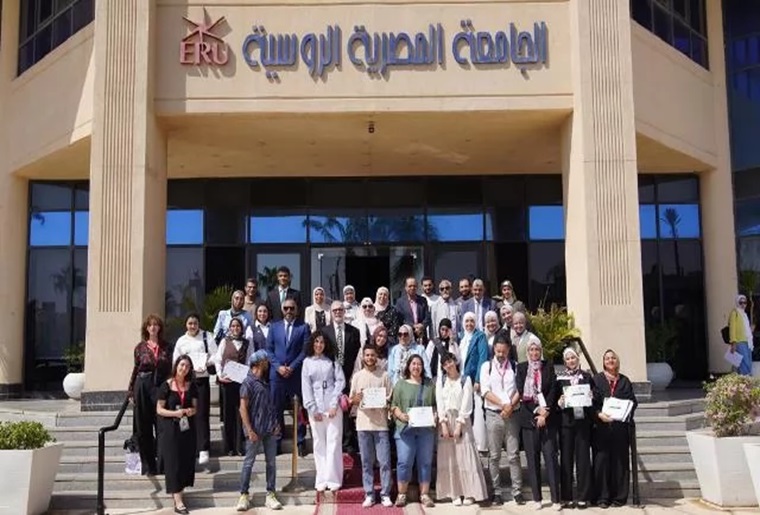
To conclude the proceedings, the University President congratulated all participating students and winners, while extending his gratitude to the jury members, academic supervisors, the administrative and organizational team, and all the entities that supported the competition.