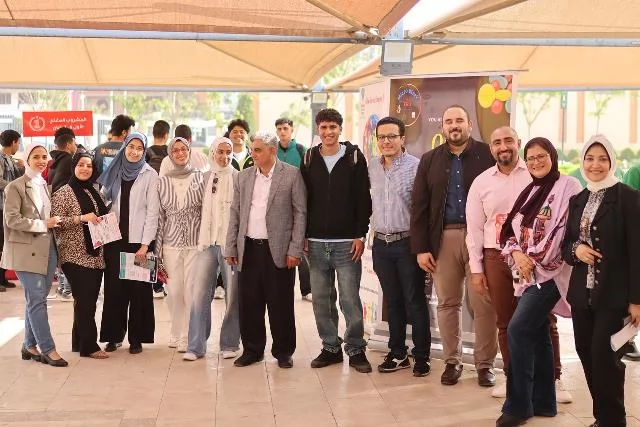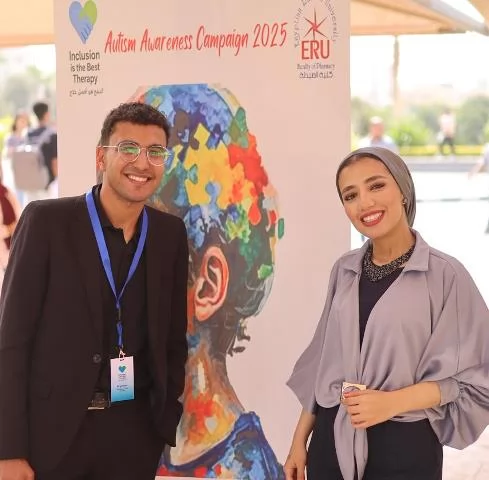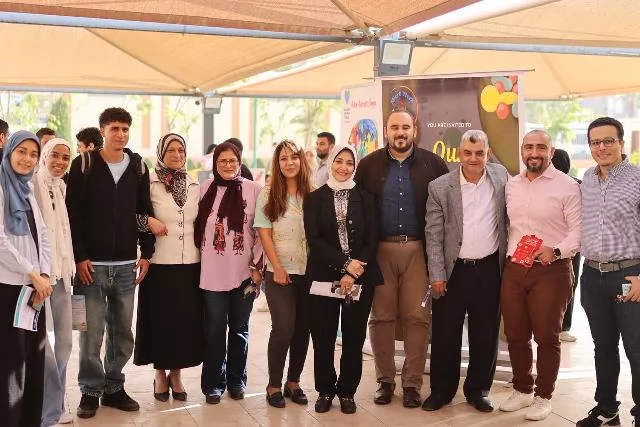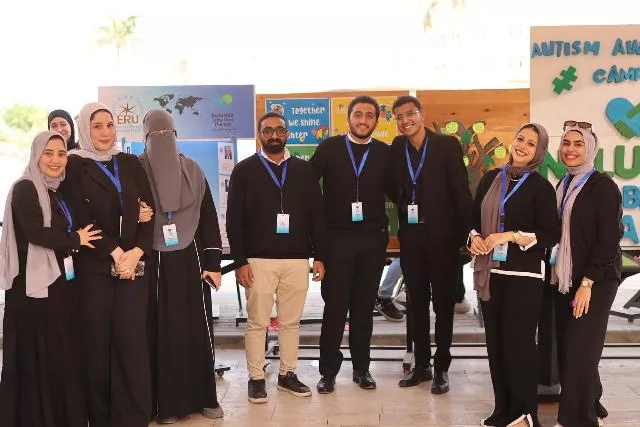
The Faculty of Pharmacy at the Egyptian-Russian University organizes a campaign to raise awareness about autism spectrum disorder.
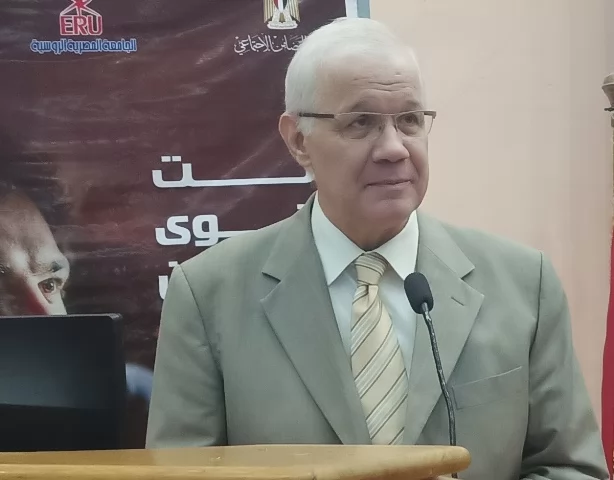
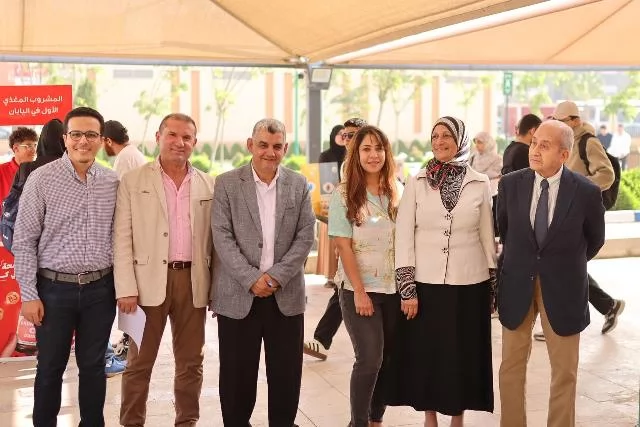
Dr. Sherif Fakhry Mohamed Abdel-Nabi, President of the Egyptian-Russian University, announced that, as part of the university’s leading community role in promoting mental health, the Faculty of Pharmacy organized a comprehensive awareness campaign under the slogan “Inclusion is the Best Treatment”. The campaign aimed to support individuals with autism spectrum disorder and spread a culture of acceptance in society. He noted that the campaign was part of the support provided by Dr. Mohamed Kamal Mustafa, Chairman of the University’s Board of Trustees, for public health, health education, and medical activities for students and staff across all faculties of the university.
In the same context, Dr. Mohamed Ehab Fattouh, Dean of the Faculty of Pharmacy at the Egyptian-Russian University, explained that the goal of these activities was to provide final-year Pharm.D students with a practical learning experience. This experience aimed to connect academic concepts with real-world applications and community service, preparing students to fulfill their professional and social roles in health awareness. He pointed out that the campaign adopted the colors blue and green for its visual identity; blue is used globally to raise awareness about autism, while green symbolizes mental health. This reflects the interconnectedness between them and emphasizes the importance of social inclusion.
The Dean of the Faculty of Pharmacy at the Egyptian-Russian University affirmed that the campaign was launched to support the mental health of individuals with autism spectrum disorder, enhance community understanding of their needs, and encourage their inclusion. It also highlighted the psychological and social challenges that individuals with autism and their caregivers may face, emphasizing the importance of acceptance and psychological support.
For his part, Dr. Jamil Abdullah, Vice Dean of the Faculty of Pharmacy at the Egyptian-Russian University, indicated that the campaign focused on raising awareness about autism spectrum disorder as a neurodevelopmental disorder. It also addressed common misconceptions through interactive activities based on reliable information from scientific bodies such as the World Health Organization and the Centers for Disease Control and Prevention. This information was presented in the form of educational games and simplified activities.
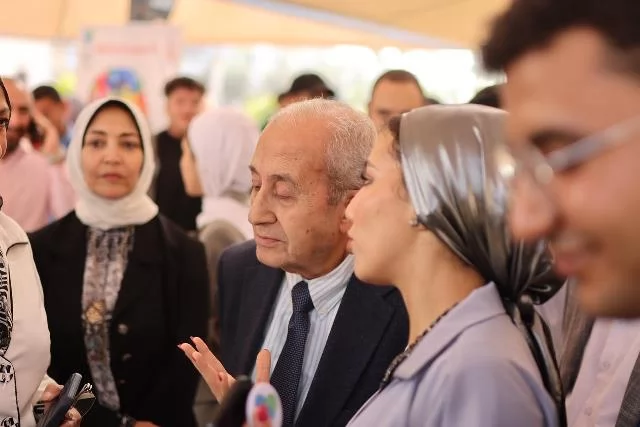
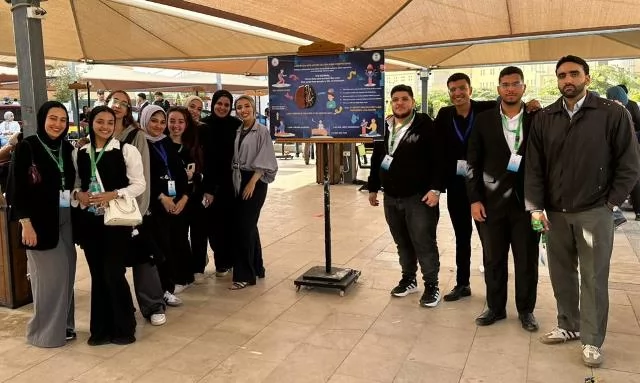
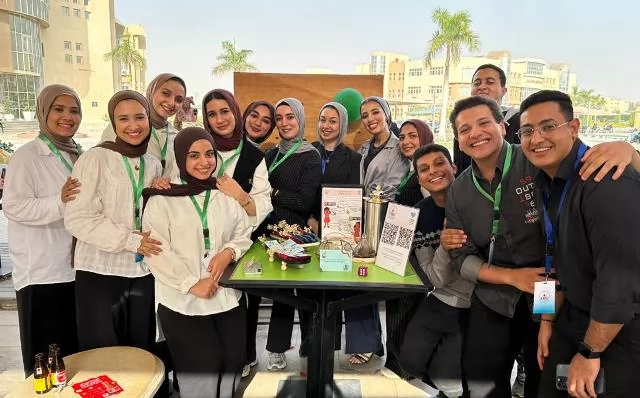
The Vice Dean of the Faculty of Pharmacy at the Egyptian-Russian University stated that the events included several interactive booths prepared by students. These booths featured simplified awareness materials, educational activities such as games, interactive quizzes, and puzzles, as well as sensory simulation activities to experience sensory stress, and role-playing activities to illustrate everyday challenges. This contributed to conveying concepts realistically and effectively to visitors. He added that the following individuals contributed to organizing the event: Ms. Israa Karim, Ms. Nesma Barbari, pharmacist Marah Hussein, pharmacist Nadine Nagi, pharmacist Rana Saad, and pharmacist Haidy Essam.
In the same context, Dr. Dalia El-Damasy, head of the Quality Unit at the Faculty of Pharmacy at the Egyptian-Russian University, stated that the campaign included a photo booth using frames bearing the campaign’s messages, in addition to a media and organizational team to cover the event and manage the activities, she noted that the students designed and printed awareness materials (“flyers”) using environmentally friendly materials. They were divided into six teams, each addressing a different aspect of the campaign’s theme, from a general introduction to in-depth exploration of specific topics such as mental health, communication, and societal challenges.
For her part, Dr. Heba Mustafa Abu Steit, supervisor of the Children’s University at the Egyptian-Russian University, pointed out that the campaign did not neglect the technological aspect. Digital content was created using QR codes, allowing visitors to learn about the stages of normal child development up to the age of five. This aimed to help parents observe and monitor any early indicators that might require seeking help from specialized centers for diagnosis and early intervention. She revealed that the campaign reflected a high level of professional and environmental awareness among the students of the Egyptian-Russian University.