At the symposium “Regional and International Challenges to Egypt’s National Security”… Samir Farag Reveals Egypt’s Confrontation of Conspiracies at the Egyptian Russian University
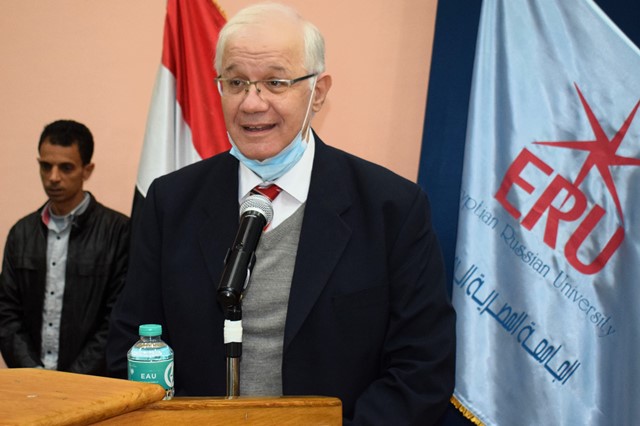
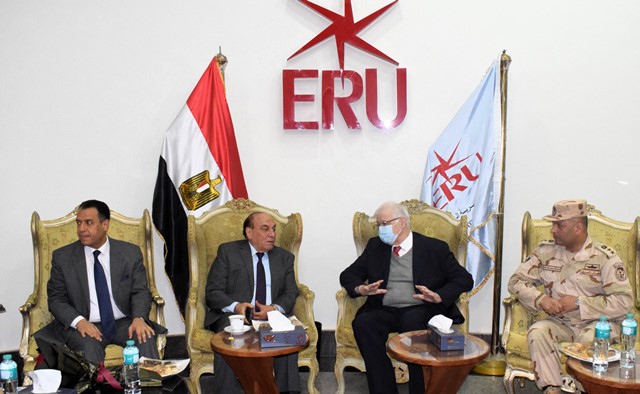
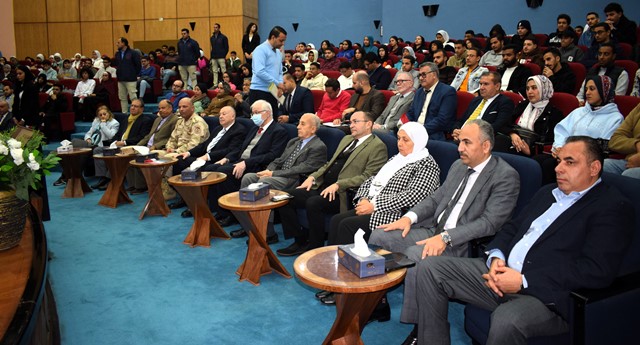
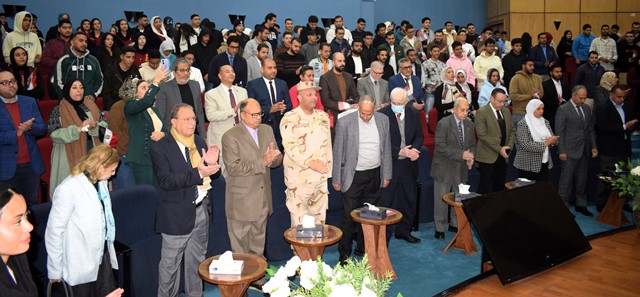
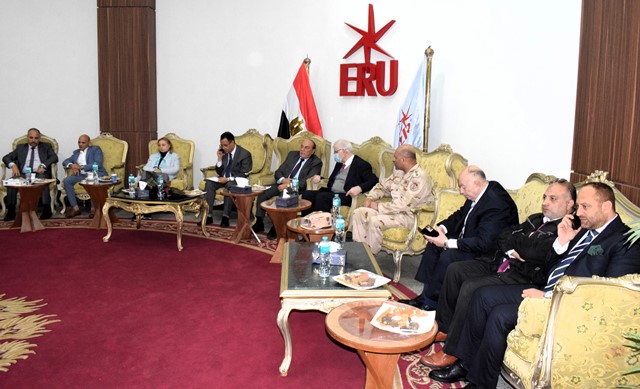
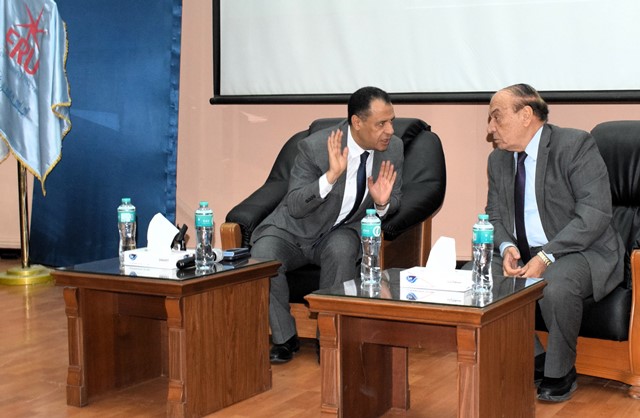
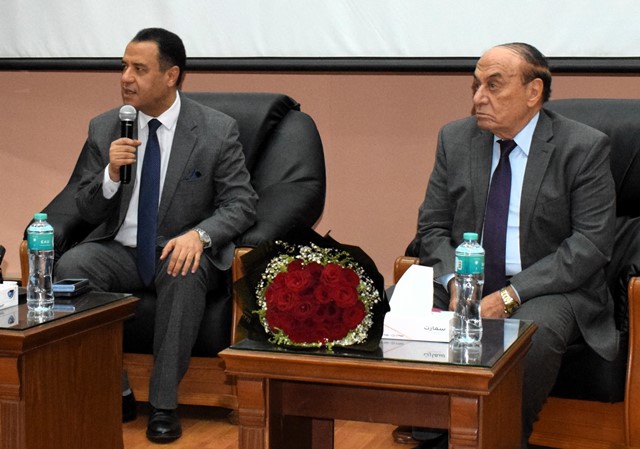
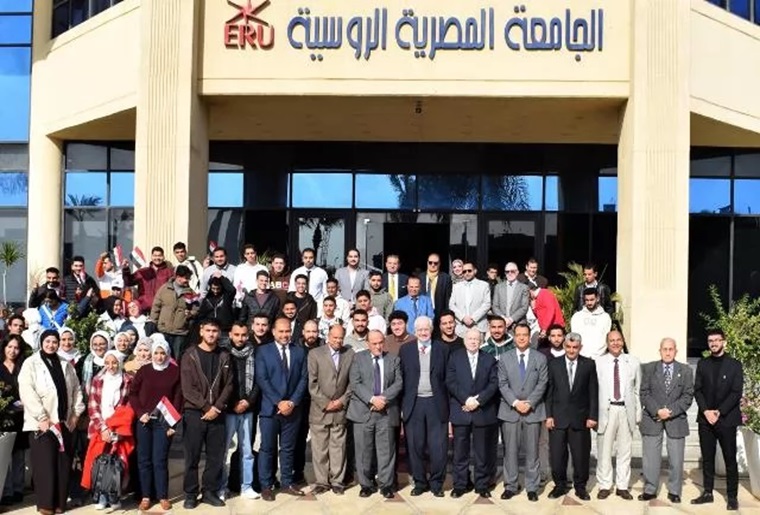
Dr. Sherif Fakhry Mohamed Abdel-Nabi, President of the Egyptian Russian University, announced that the university administration organized a symposium entitled “Regional and International Challenges to Egypt’s National Security.” The symposium was delivered by Major General (Ret.) Dr. Samir Farag, former Director of Moral Affairs of the Egyptian Armed Forces, former Governor of Luxor, and strategic thinker. He spoke to university students about the most prominent challenges facing Egypt’s national security at both the regional and international levels. The symposium was held with the support of Dr. Mohamed Kamal Mostafa, Chairman of the University’s Board of Trustees, and was attended by a large number of faculty members and public figures.
In the same context, Major General (Ret.) Dr. Samir Farag emphasized the importance of awareness, highlighting the key regional and international strategic files that affect national security, as well as the role of political leadership in protecting the Egyptian state. He stressed the importance of societal awareness in confronting these challenges, affirming that the unity and cohesion of the Egyptian people constitute the first line of defense for the homeland.
Dr. Samir Farag stated that the political and economic situations in neighboring countries have a significant impact on Egypt’s national security, as they are extensions of it—such as what is happening in Sudan, the Gaza Strip, Libya, Syria, Somalia, Eritrea, Yemen, and Djibouti. He pointed to Egypt’s major role in halting the war in Gaza and in laying the foundations of a peace agreement at the Sharm El-Sheikh Peace Summit, attended by the U.S. President and 40 heads of state. He also spoke about the importance of societal awareness in confronting rumors and fourth- and fifth-generation warfare, stressing that building the awareness of the Egyptian citizen represents the first line of defense against the challenges that affect everyone.
Major General Samir Farag noted that the Suez Canal suffered significant losses in recent years due to developments in the Horn of Africa and the Red Sea, and highlighted the Egyptian state’s role in managing this file. He also referred to the red lines declared by President Abdel Fattah El-Sisi in the Libyan regions of Sirte and Al-Jufra, and Egypt’s contribution to stabilizing Libya in order to secure Egypt’s western borders. He added that the tools of fourth- and fifth-generation warfare are numerous and varied, most notably psychological warfare, which includes a set of short-, medium-, and long-term plans. He clarified that it is not required of the ordinary citizen striving for a living to engage in complex philosophies or study cognitive sciences; rather, victory in fifth-generation warfare is no longer the responsibility of political leadership and the armed forces alone, but a shared responsibility for all, each within their field. Such warfare requires the awareness of the current generation and their arming with science and technology.
During the symposium, Major General Samir Farag spoke about the dangers of electronic battalions in spreading rumors, explaining that they consist of groups of fake accounts run by a limited number of individuals to control social media platforms. These accounts promote hashtags to create trends by spreading misleading news and information. Amid such posts, a misleading post or false information is inserted—described as “poison in the honey.”
For his part, Dr. Shehata Gharib, Advisor to the President of the Egyptian Russian University for Institutional Development, stated that the aim of organizing the symposium was to strengthen students’ spirit of loyalty and belonging. He revealed that the university is keen on developing students’ political thinking, enhancing their ability to analyze and evaluate internal and external issues realistically and soundly, and raising their awareness of national issues and their understanding of the nature of the challenges facing the Egyptian state at this stage—especially since national security represents the cornerstone of stability and the launch toward comprehensive development.
The advisor praised Major General (Ret.) Dr. Samir Farag, the strategic thinker, and his contributions throughout a distinguished career—whether in the armed forces or in the media through his writings and televised debates—to raise public awareness of the risks facing the Egyptian state and the Middle East region. He emphasized the importance of such symposiums, particularly when attended by leading thinkers, scholars, and specialists, in enhancing awareness, transferring expertise, and promoting interaction between students and faculty members from both within and outside the university.
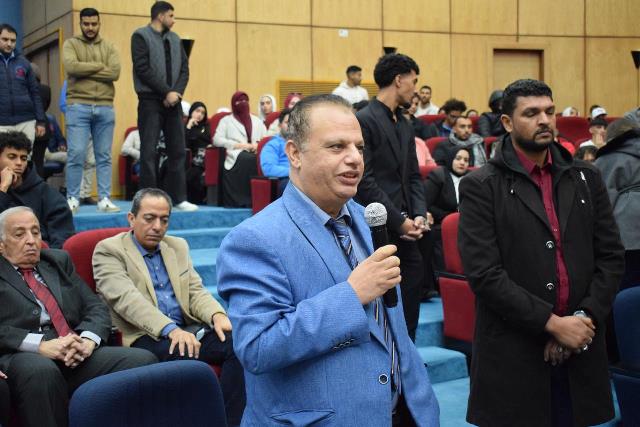
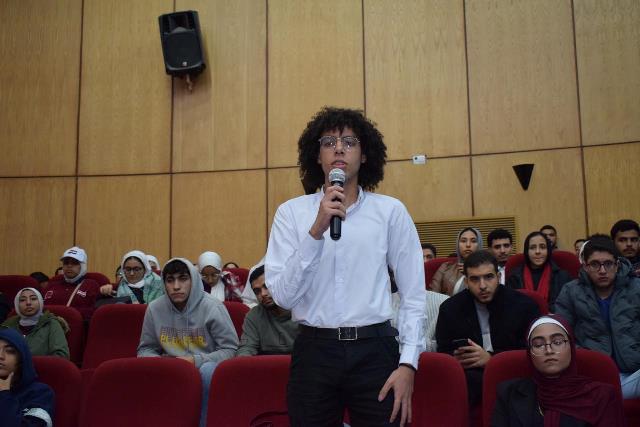
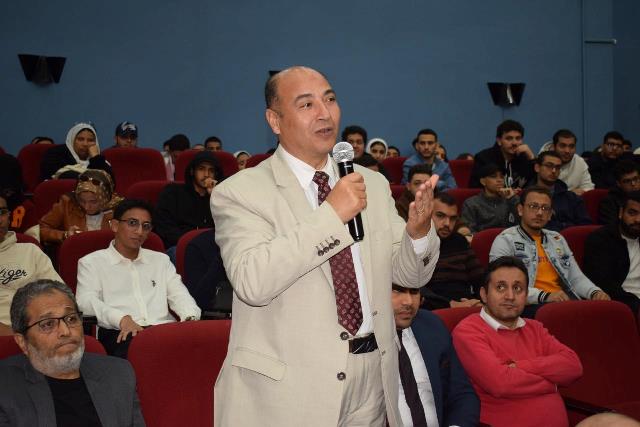
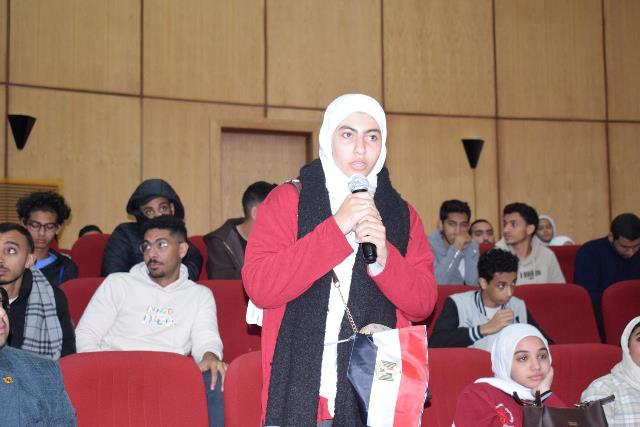
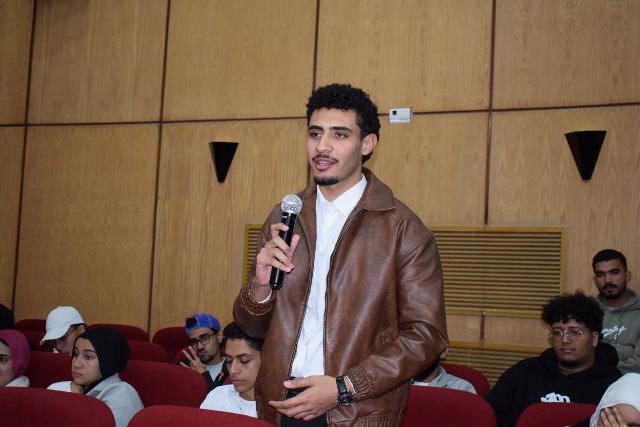
Dr. Shehata Gharib noted that the symposium witnessed active interaction and an open dialogue between students and Major General Samir Farag. Students posed numerous questions reflecting their awareness of regional challenges, and the Major General provided comprehensive answers that enhanced their understanding of many strategic issues, as well as the concepts of national security and fourth- and fifth-generation warfare.
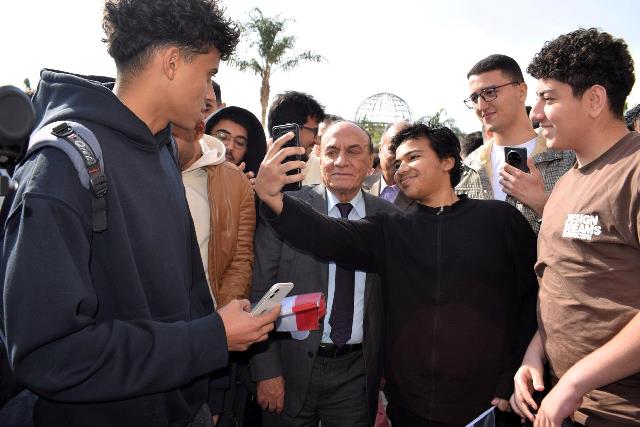
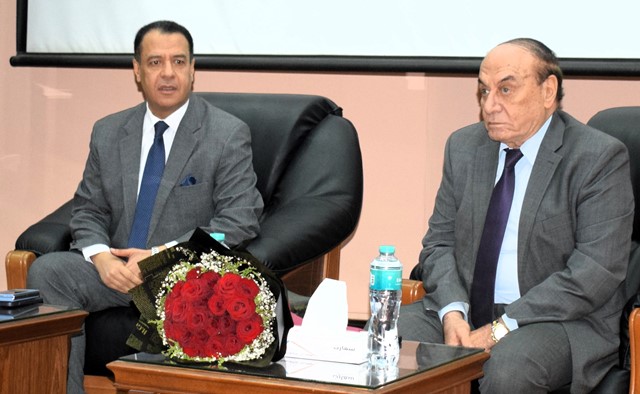
At the conclusion of the symposium, Dr. Sherif Fakhry, President of the Egyptian Russian University, presented the university shield to Major General (Ret.) Dr. Samir Farag in recognition and appreciation of his distinguished record in serving the nation and society and his effective participation in the symposium. Students expressed their happiness with the event as a valuable addition to the university’s national awareness activities and were keen to take commemorative photos with Dr. Samir Farag.
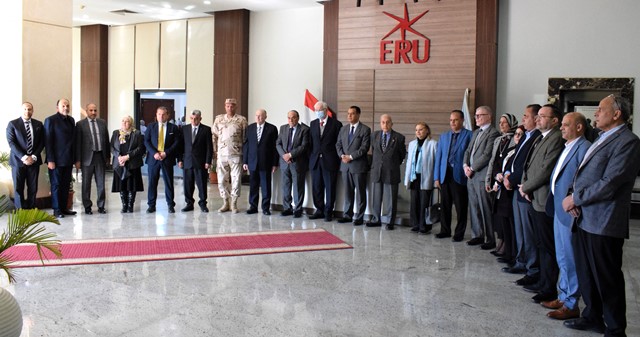
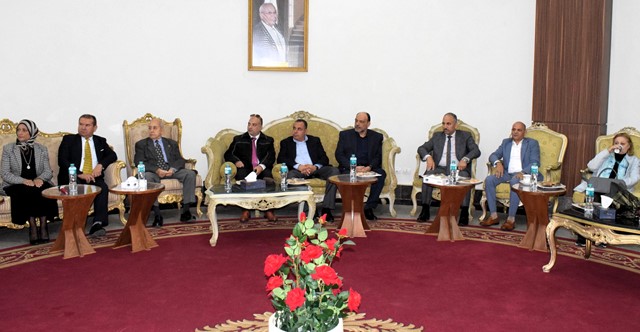
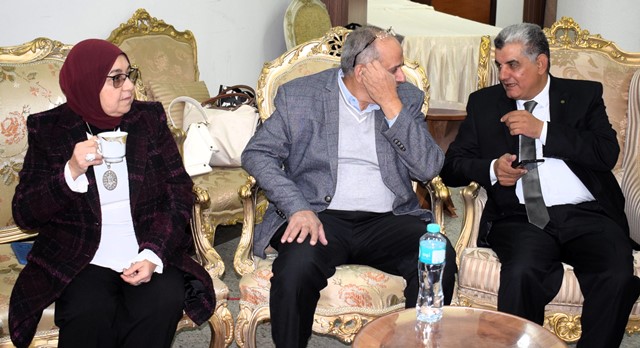
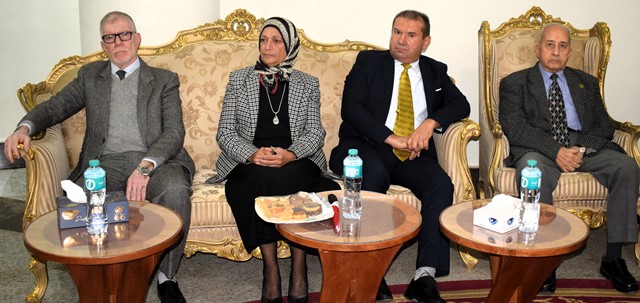
It is worth noting that the event was attended by: Dr. Essam Khamis, Advisor to the University President for Academic Development; Dr. Hanaa Abdel-Rahman, Advisor for Student Activities; Dr. Khaled Tawfik, Dean of the Faculty of Oral and Dental Medicine; Dr. Ehab Fattouh, Dean of the Faculty of Pharmacy; Dr. Alaa Mohamed El-Batsh, Dean of the Faculty of Engineering; Dr. El-Tahera El-Sayed, Dean of the Faculty of Management, Economics, and Business Technology; Dr. Hisham Fathy, Dean of the Faculty of Artificial Intelligence; Dr. Makarem El-Ghamry, Dean of the Faculty of Al-Alsun (Languages); Ayman Gomaa, Chairman of the Board of Trustees of Badr City; Abdel-Rahman Abdel-Fattah, Chairman of the Association of Businessmen and Investors of Badr City; Dr. Gamal Abdullah, Vice Dean of the Faculty of Pharmacy; Dr. Saeed Hassan, Vice Dean of the Faculty of Artificial Intelligence; Raafat Kotb, Secretary-General of the Association of Businessmen and Investors of Badr City; and Eng. Walid Fayek, Treasurer of the Association of Businessmen and Investors of Badr City