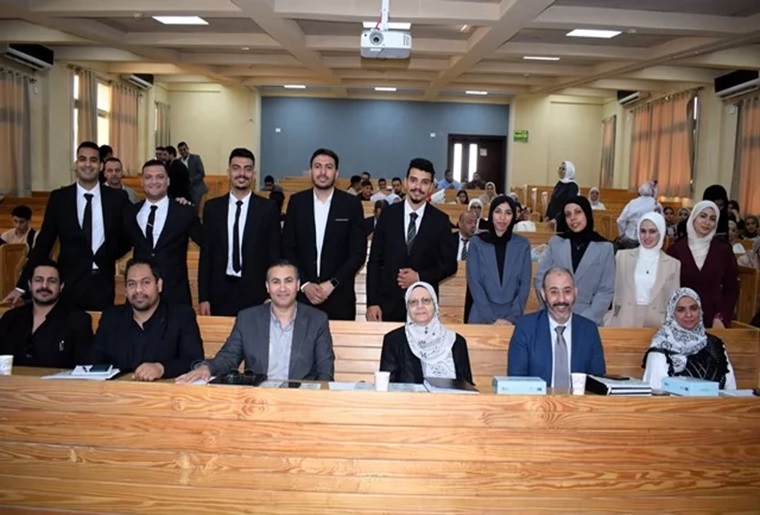
Egyptian Russian University Engineering Students’ Projects Signal a Promising Digital Future
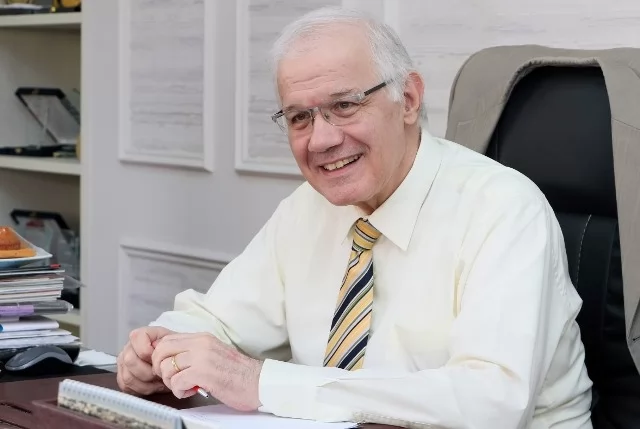
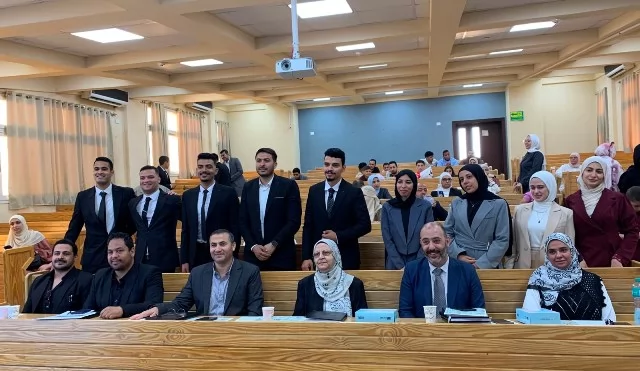
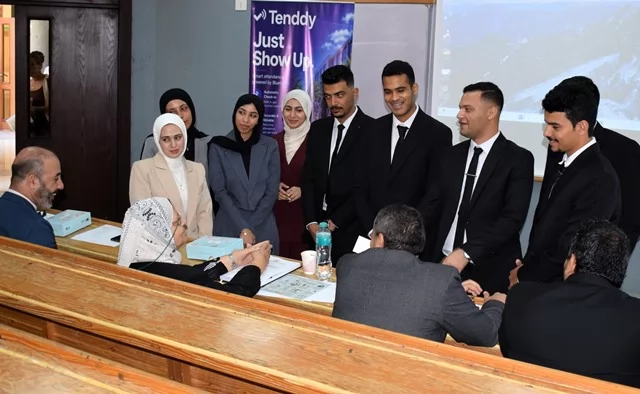
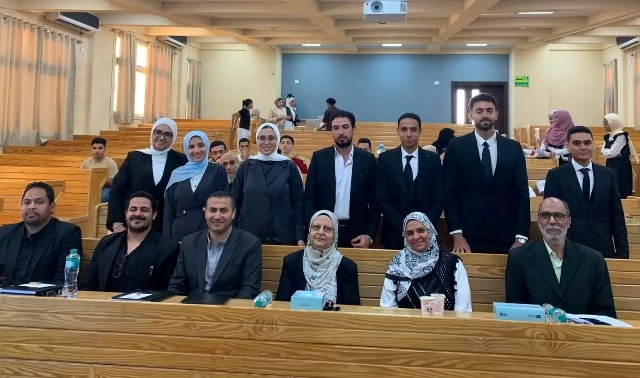
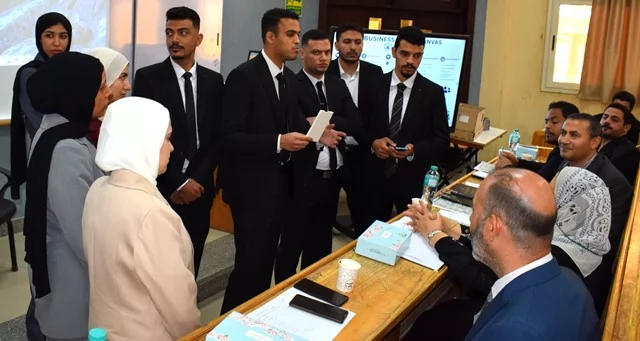
Dr. Sherif Fakhry Mohamed Abdel Nabi, President of the Egyptian Russian University (ERU), announced that, as part of the university’s commitment to linking scientific research with student innovation, the Department of Communications Engineering at the Faculty of Engineering recently discussed a number of graduation projects presented by fourth-year students for the 2025–2026 academic year.
He explained that these projects reflect the university’s vision of preparing graduates capable of meeting labor market demands while promoting sustainability. This year’s projects featured intelligent solutions and forward-looking applications that embody the spirit of the digital age. One of the projects has already begun the process of applying for a patent and is expected to evolve into a promising start-up company.
Dr. Abdel Nabi added that these projects demonstrate ERU’s ongoing commitment to fostering innovation and entrepreneurship. They receive strong support from Dr. Mohamed Kamal El-Sayed Mostafa, Chairman of the University’s Board of Trustees, and are aligned with the university’s strategy of transforming theoretical knowledge into practical applications that serve society and enhance quality of life.
In the same context, Dr. Alaa Mohamed El-Batsh, Dean of the Faculty of Engineering, stated that the evaluation committee included a distinguished group of academic experts: Dr. Hala Abdel Kader, Professor in the Department of Communications Engineering at Shoubra Faculty of Engineering; Dr. Hesham Abdel Hady, who served as an external examiner; and Dr. Ahmed Hamdy, who represented the internal examination committee. The committee highly praised the outstanding quality of the projects, the originality of the proposed ideas, and the students’ ability to employ cutting-edge technologies to solve real-world problems.
The first project, titled “IntelliAttend: An AI-Enhanced Bluetooth Tracking System for Student Attendance and Predictive Analytics,” was supervised by Dr. Tamer Saleh. The project was developed by Ahmed Hesham, Abdel Aziz Ayman, Abrar Atef, Mohamed Ahmed, Ahmed Ehab, Jannatallah Ayman, Renad Ali, Abdelrahman Bakr, and Fatma Adel.
Dr. El-Batsh explained that the project contributes to United Nations Sustainable Development Goal (SDG) 4: Quality Education, by improving the efficiency of educational management and significantly reducing the time spent on traditional attendance procedures, allowing more time for effective teaching and learning.
He further noted that the system represents a major advancement in academic attendance management. It utilizes Bluetooth Low Energy (BLE) technology to automatically record students’ attendance as soon as they enter the classroom. Artificial intelligence algorithms help prevent fraud and manipulation, while an interactive dashboard enables faculty members to monitor attendance in real time and generate detailed reports on student absenteeism across different courses. The project offers a comprehensive solution that enhances transparency and operational efficiency.
Dr. El-Batsh also revealed that the project has strong commercial potential. The student team intends to establish a start-up company based on the system after graduation and has already initiated the procedures for obtaining a patent due to the project’s innovative features and practical value.
Dr. Shaimaa Mostafa, Head of the Communications Engineering Department, highlighted the second project, titled “Digital Twin for Automated Systems: Real-Time Monitoring, Control, Simulation, and Analytics,” supervised by Dr. Mohamed Ahmed Maher. The project was carried out by Al-Zahraa Waleed, Jihad Abdel Aziz, Rawan Tarek, Ahmed Abu Bakr, Ahmed Mohamed Atef, Nagy Mohamed, and Mohamed Abdel Rahim.
She explained that the team successfully developed a digital twin model that integrates an Internet of Things (IoT)-based physical system with an interactive three-dimensional virtual environment. The system enables real-time monitoring, live control, safe simulation, data analysis, and anomaly detection. The project provides a scalable model suitable for smart homes, smart cities, and industrial systems, placing students at the forefront of digital transformation.
Dr. Mostafa added that the project supports SDG 9: Industry, Innovation and Infrastructure, as digital twin technology enhances industrial development and infrastructure by enabling intelligent simulations that reduce failures and improve operational efficiency.
She also presented the third project, “Smart Performance Monitoring for 5G Mobile Communications Systems,” supervised by Dr. Mohamed Mostafa and developed by Hadeel Salem, Roaa Mohamed, Karim Hany, and Mona Essam.
The project focuses on evaluating the performance of 5G mobile communication networks by monitoring key performance indicators (KPIs), including data transmission speed, latency, signal strength, and connection success rate. It also employs advanced data analytics tools to detect performance degradation instantly. The project contributes to improving service quality and ensuring an exceptional user experience while demonstrating the students’ capability to work with advanced communication technologies.
Furthermore, Dr. Mostafa emphasized that the project also contributes to SDG 9: Industry, Innovation and Infrastructure, as reliable and efficient 5G networks form the backbone of comprehensive digital transformation and industrial innovation while strengthening information and communication technology infrastructure.
In conclusion, Dr. Shaimaa Mostafa commended the dedicated academic supervisors—Dr. Tamer Saleh, Dr. Mohamed Ahmed Maher, and Dr. Mohamed Mostafa—for their outstanding mentorship and scientific guidance, which played a vital role in the success of these innovative projects. She also expressed her appreciation to the evaluation committee for its objective assessment and valuable feedback, which will further enrich the academic journey of the university’s students.