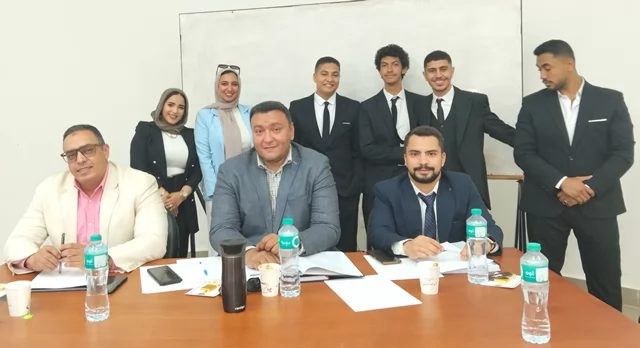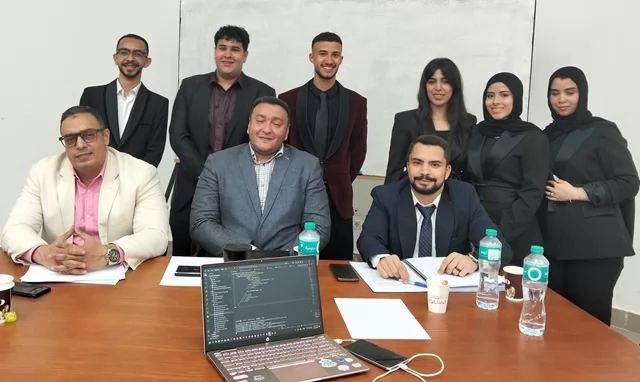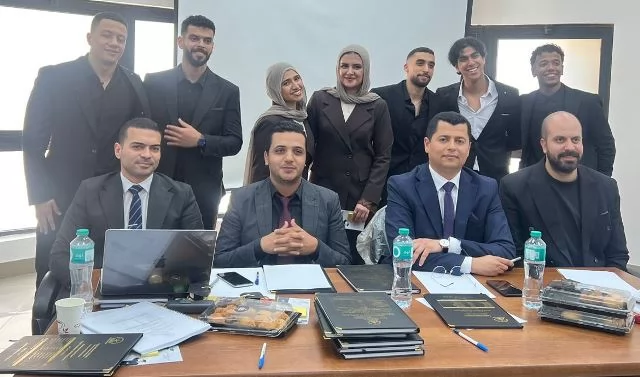
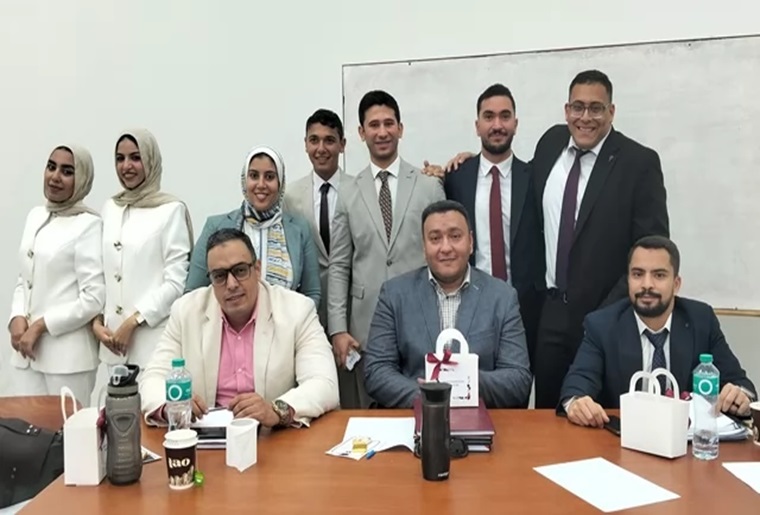
Through graduation projects... Egyptian-Russian University students present 41 advanced artificial intelligence projects... Photos
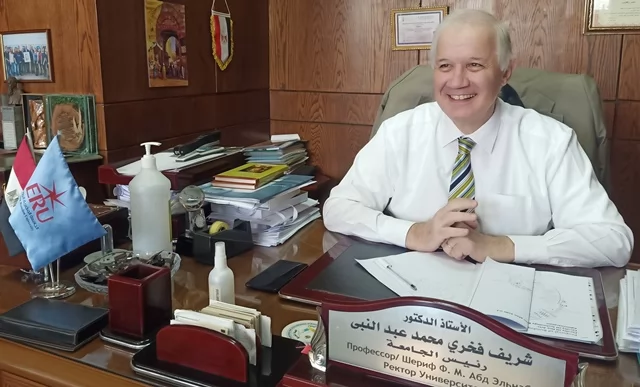
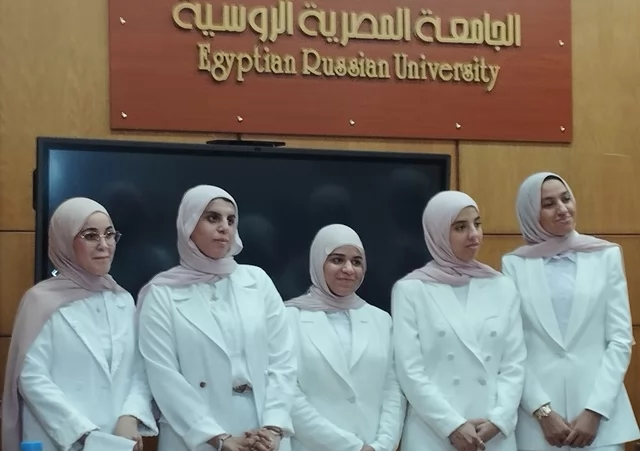
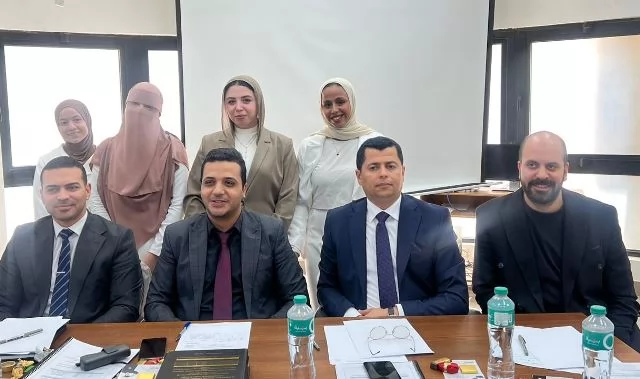
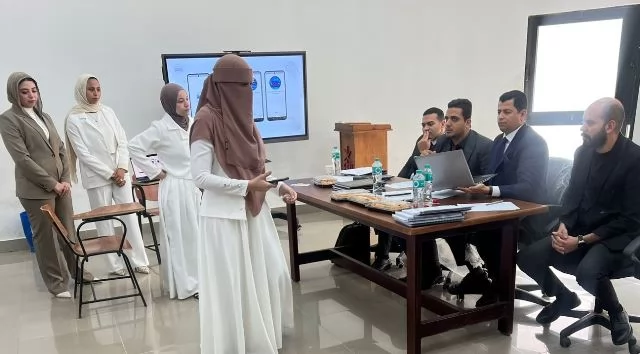
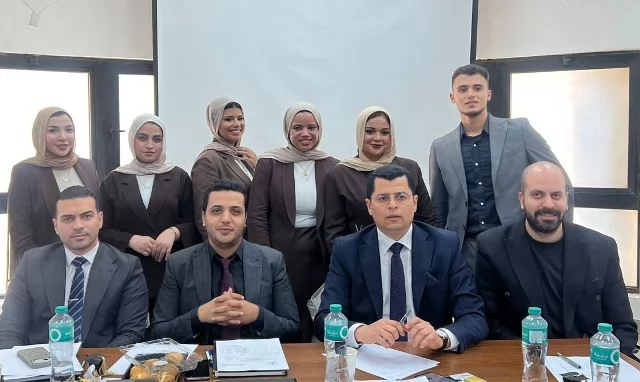
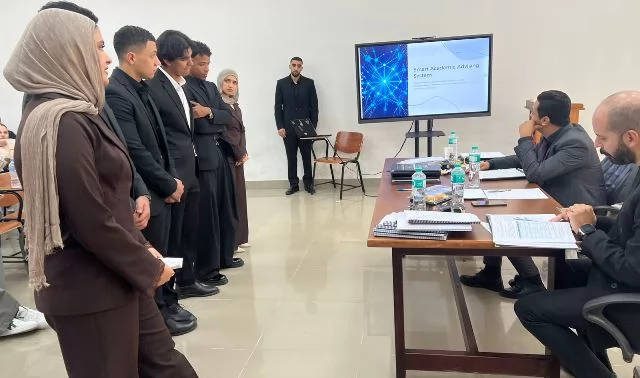
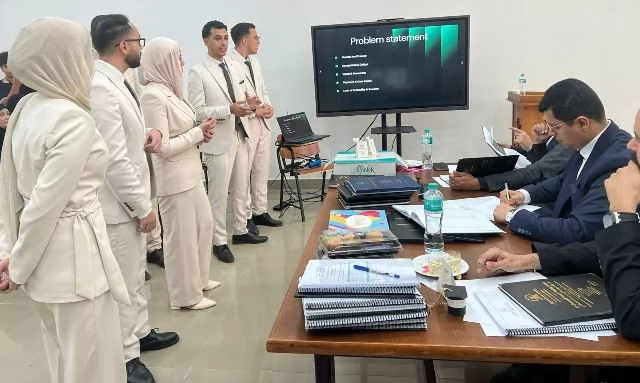
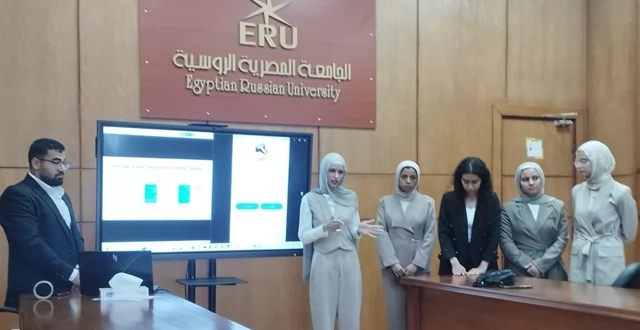
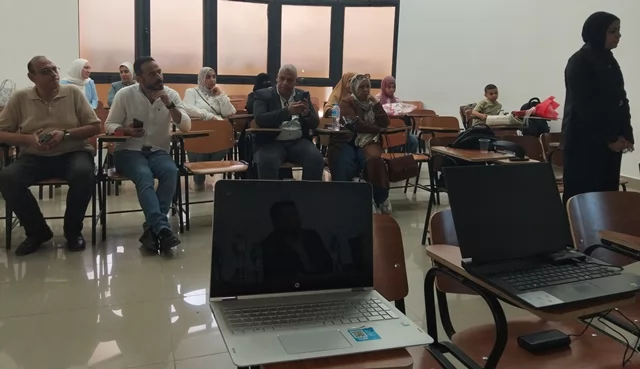
Dr. Sherif Fakhry Mohamed Abdel-Nabi, President of the Egyptian-Russian University, announced that the university’s Faculty of Artificial Intelligence held graduation project presentations for the second semester of the 2025/2026 academic year. He noted that the faculty witnessed the presentation of 41 graduation projects before specialized scientific committees comprised of professors and specialists from within and outside the university. These projects reflected a clear diversity in the fields of artificial intelligence and its modern applications, including: intelligent information systems, smart services and decision support, artificial intelligence applications in industry, cybersecurity, intelligent systems, and healthcare and medicine. This was all under the patronage of Dr. Mohamed Kamal El-Sayed Mostafa, Chairman of the University’s Board of Trustees.
The President of the Egyptian-Russian University affirmed that the discussion of graduation projects at the Faculty of Artificial Intelligence represents a significant milestone in preparing graduates capable of meeting the demands of the Fourth Industrial Revolution and digital transformation. He noted that the university places great importance on supporting applied student projects that combine academic knowledge with practical innovation. He added that the ideas and applied models presented by the students reflect the university’s commitment to providing university education that is relevant to the needs of society and the labor market, and capable of producing technological solutions that contribute to supporting national development.
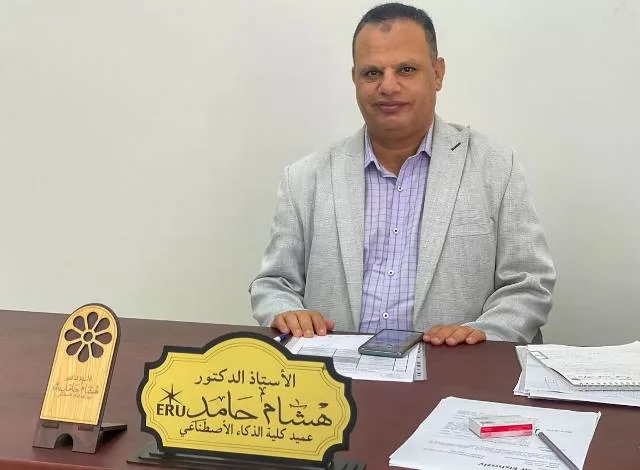
On the same topic, Dr. Hisham Fathi Hamed, Dean of the Faculty of Artificial Intelligence at the Egyptian-Russian University, explained that this year’s graduation projects demonstrated a remarkable improvement in the students’ level and their ability to utilize artificial intelligence tools to address diverse and real-world problems. He emphasized that the faculty is working to establish a stimulating educational and research environment that fosters innovation and encourages students to transform their ideas into practical and implementable applications.
The Dean of the Faculty of Artificial Intelligence at the Egyptian-Russian University pointed out that the diversity of project topics reflects the breadth of study within the faculty and confirms the students’ readiness to compete in advanced technological fields. He revealed that these events stem from the Faculty of Artificial Intelligence’s commitment to preparing graduates with integrated scientific and applied skills, capable of innovation and competition in the local, regional, and international job markets. This reflects the university’s mission to provide distinguished education, applied research, and effective community service that meets the demands of the future.
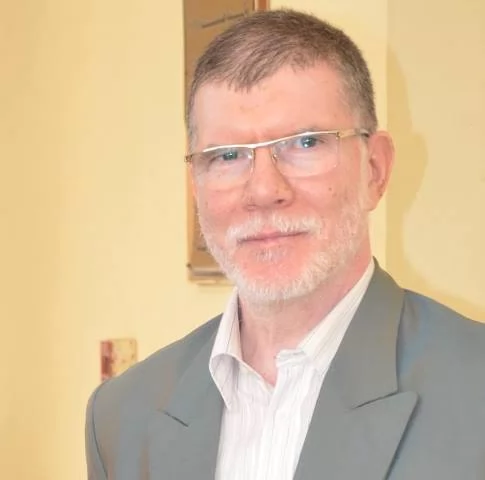
For his part, Dr. Saeed Hassan Ibrahim, Vice Dean for Education and Student Affairs at the Faculty of Artificial Intelligence, stated that the discussion events reflected the students’ commitment to seriousness, discipline, and teamwork, as well as their ability to present their ideas scientifically and systematically before specialized committees. He explained that the faculty is keen to follow up with students throughout the project preparation stages, from idea selection, through implementation and development, to presentation and discussion. This ensures the achievement of genuine learning outcomes that combine theoretical knowledge, practical skills, and the ability to communicate, present, and analyze.
The Vice Dean for Education and Student Affairs at the Faculty of Artificial Intelligence at the Egyptian-Russian University stated that the discussions involved specialized academic committees comprised of professors, faculty members, and specialists from both within and outside the university. The projects were evaluated based on several criteria, including: the concept, practicality, results, applicability, target audiences, and feasibility of future development. He added that the projects demonstrated the students’ ability to address contemporary issues in the fields of digital transformation, predictive analytics, cybersecurity, smart services, and AI-based medical applications.
In the same context, Dr. Sameh Zarif, Vice Dean for Graduate Studies and Scientific Research at the Faculty of Artificial Intelligence at the Egyptian-Russian University, affirmed that graduation projects represent an important nucleus for applied research and innovation within the faculty, especially since a number of projects addressed modern topics in: “cybersecurity, smart healthcare, decision support, intelligent systems, and data analysis,” which opens the way for developing these ideas into research projects or applications that can be adopted by industrial and service entities. He pointed out that linking student projects to modern research and technological priorities enhances the faculty’s role in supporting innovation and building cadres capable of contributing to the knowledge economy
The President of the Egyptian-Russian University affirmed that the discussion of graduation projects at the Faculty of Artificial Intelligence represents a significant milestone in preparing graduates capable of meeting the demands of the Fourth Industrial Revolution and digital transformation. He noted that the university places great importance on supporting applied student projects that combine academic knowledge with practical innovation. He added that the ideas and applied models presented by the students reflect the university’s commitment to providing university education that is relevant to the needs of society and the labor market, and capable of producing technological solutions that contribute to supporting national development.
On the same topic, Dr. Hisham Fathi Hamed, Dean of the Faculty of Artificial Intelligence at the Egyptian-Russian University, explained that this year’s graduation projects demonstrated a remarkable improvement in the students’ level and their ability to utilize artificial intelligence tools to address diverse and real-world problems. He emphasized that the faculty is working to establish a stimulating educational and research environment that fosters innovation and encourages students to transform their ideas into practical and implementable applications.
The Dean of the Faculty of Artificial Intelligence at the Egyptian-Russian University pointed out that the diversity of project topics reflects the breadth of study within the faculty and confirms the students’ readiness to compete in advanced technological fields. He revealed that these events stem from the Faculty of Artificial Intelligence’s commitment to preparing graduates with integrated scientific and applied skills, capable of innovation and competition in the local, regional, and international job markets. This reflects the university’s mission to provide distinguished education, applied research, and effective community service that meets the demands of the future.
For his part, Dr. Saeed Hassan Ibrahim, Vice Dean for Education and Student Affairs at the Faculty of Artificial Intelligence, stated that the discussion events reflected the students’ commitment to seriousness, discipline, and teamwork, as well as their ability to present their ideas scientifically and systematically before specialized committees. He explained that the faculty is keen to follow up with students throughout the project preparation stages, from idea selection, through implementation and development, to presentation and discussion. This ensures the achievement of genuine learning outcomes that combine theoretical knowledge, practical skills, and the ability to communicate, present, and analyze.
The Vice Dean for Education and Student Affairs at the Faculty of Artificial Intelligence at the Egyptian-Russian University stated that the discussions involved specialized academic committees comprised of professors, faculty members, and specialists from both within and outside the university. The projects were evaluated based on several criteria, including: the concept, practicality, results, applicability, target audiences, and feasibility of future development. He added that the projects demonstrated the students’ ability to address contemporary issues in the fields of digital transformation, predictive analytics, cybersecurity, smart services, and AI-based medical applications.
In the same context, Dr. Sameh Zarif, Vice Dean for Graduate Studies and Scientific Research at the Faculty of Artificial Intelligence at the Egyptian-Russian University, affirmed that graduation projects represent an important nucleus for applied research and innovation within the faculty, especially since a number of projects addressed modern topics in: “cybersecurity, smart healthcare, decision support, intelligent systems, and data analysis,” which opens the way for developing these ideas into research projects or applications that can be adopted by industrial and service entities. He pointed out that linking student projects to modern research and technological priorities enhances the faculty’s role in supporting innovation and building cadres capable of contributing to the knowledge economy